Compost Project
The initiative, a collaboration between Pine Lake and the Office of Wellness & Health Promotion, invites members of the campus community to compost organic waste while supporting long-term sustainability efforts.
2025-2026 Results
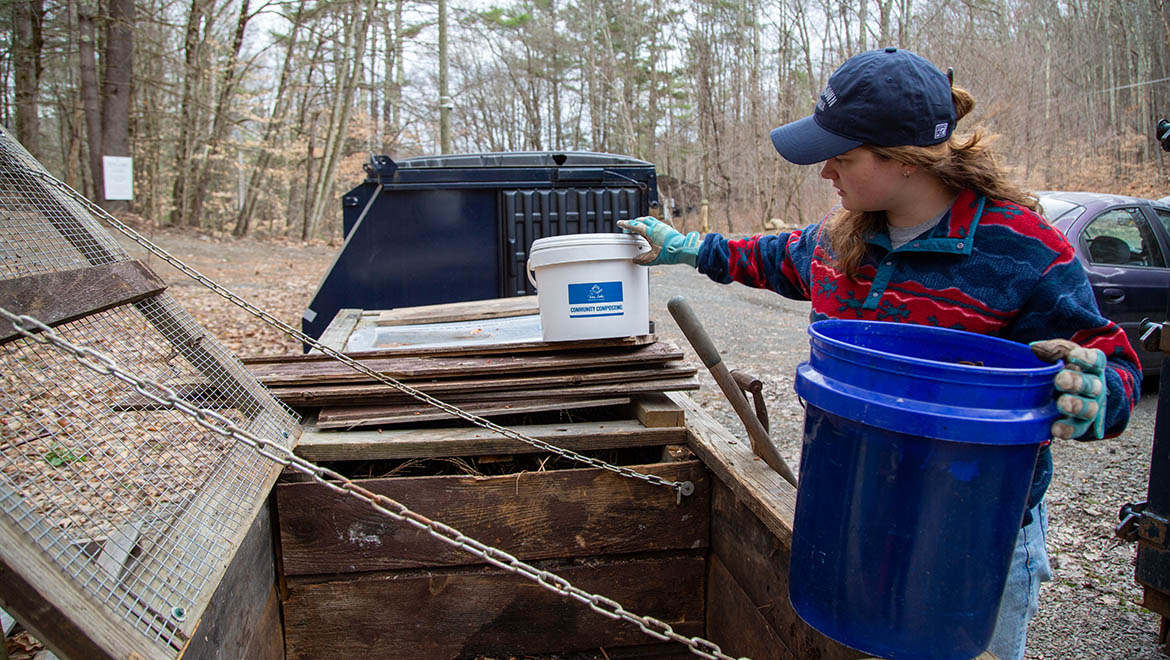
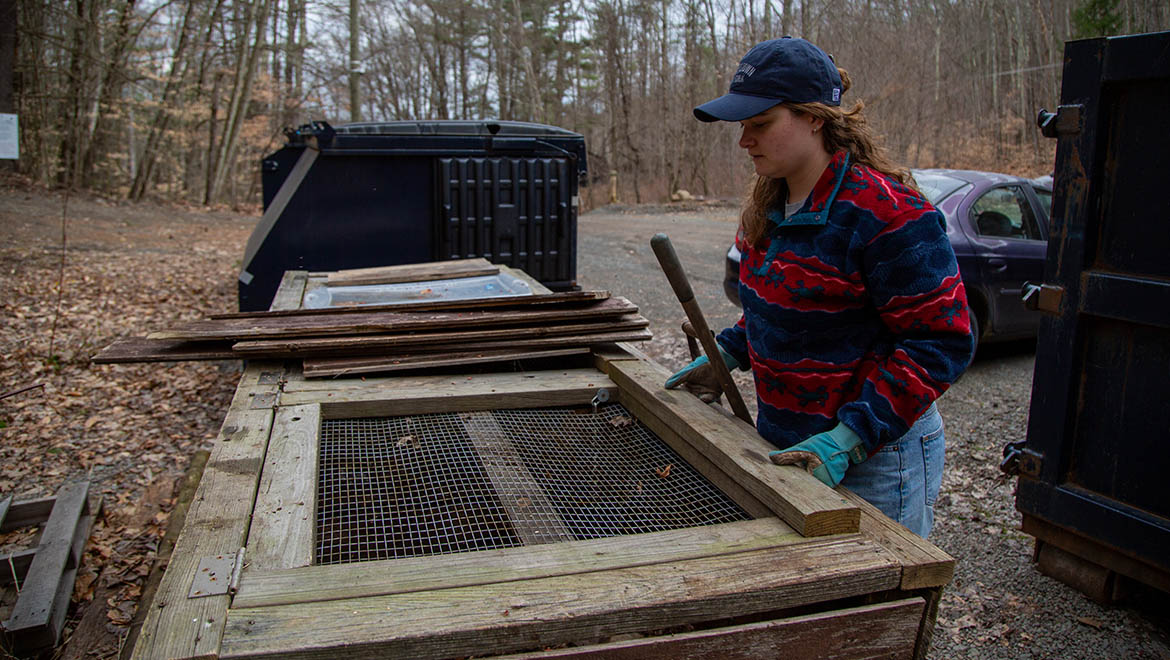
Abi DeMan ’26, a triple major in anthropology, philosophy, and environmental studies and sustainability, served as the first Pine Lake Compost Steward, a student position responsible for collecting compost from campus, transporting it to Pine Lake and maintaining the system.
The Hartwick community filled 273 three gallon compost buckets; diverted 165.5 cubic feet of organic material from the waste stream; and, our “Compost Share” breakdown showed fantastic participation across the board:
- 56% from The Commons & Table Rock Café
- 33% from Campus
- 11% from John Christopher’s Café.
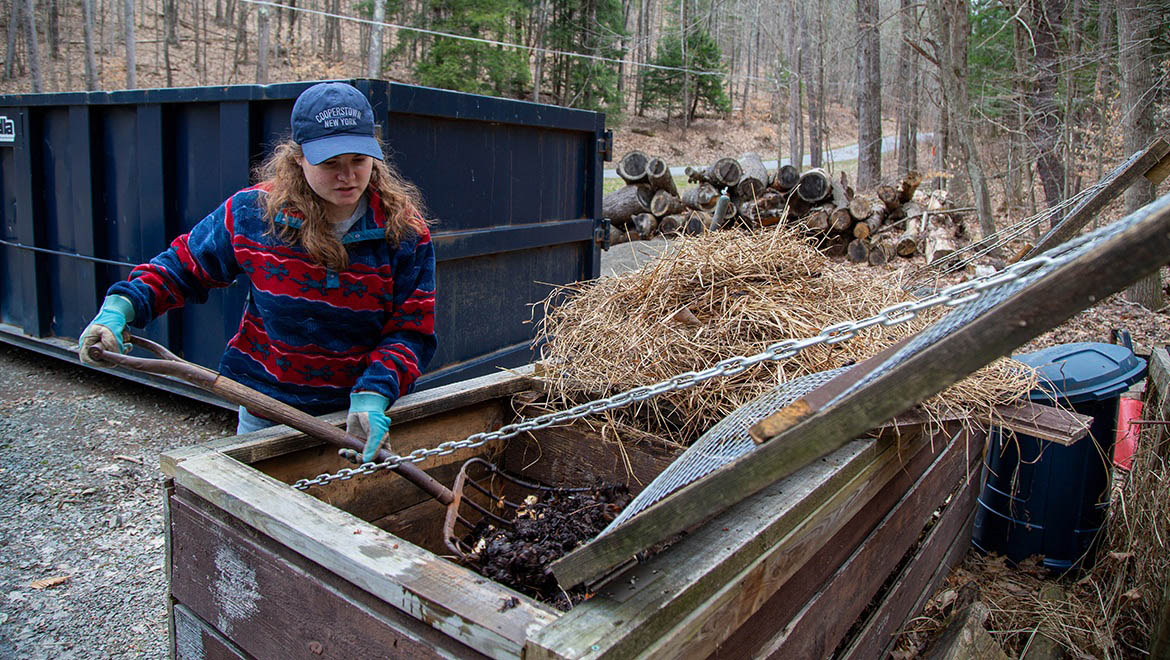
Putting Our Compost to Work: Community Garden
Composted ready material has been used to rehabilitate the small garden outside the rear of the lodge, which will now serve as an herb garden.
The Community Garden will be located on the north-east side of the Pine Lake parking lot. Construction is underway, with the goal of planting in the Spring of 2027.
Join Us
If you haven’t joined the composting movement yet, it is never too late! We welcome new users at any time.
To help keep the program running smoothly, we charge a one-time $5 bucket fee. This small fee covers your personal three gallon compost bucket, supports the cost of gas to transport material to and from Pine Lake, and offsets the cost of essential supplies needed to make our compost pile a success.
Step 1: Please use this registration link to sign up.
Step 2: Please use this link for your bucket reservation.
(This will bring you to the Pine Lake Membership page. Simply select “Merchandise,” enter $5.00, and pay the fee).
Community Composting Guidelines
Greens & Browns
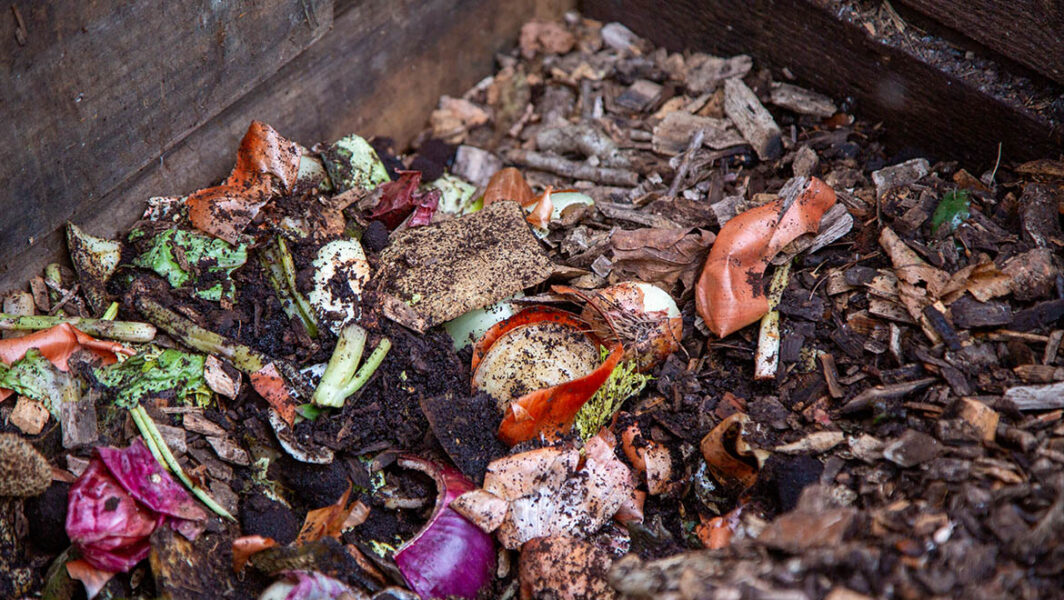
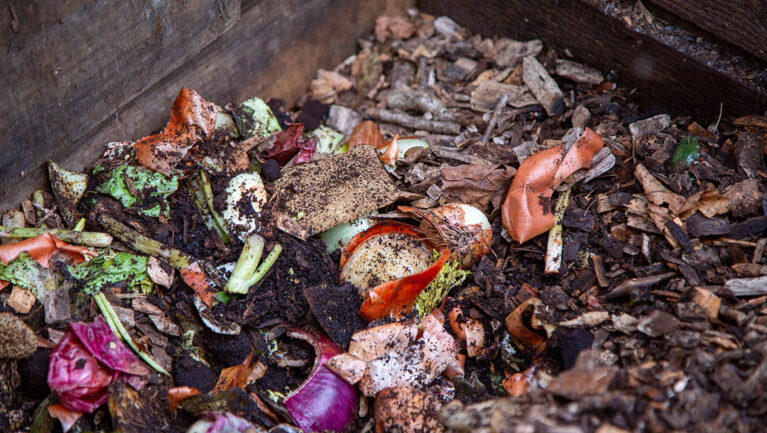
Composting uses a mix of green and brown organic materials that are naturally broken-down overtime to produce a rich additive to soil to help promote growth and reduce waste entering landfills. The ratio should be two-parts browns to one-part greens. Too many browns won’t break down and too many greens will cause a smelly compost. See the lists below for examples of greens and browns.
Greens
Fruit left overs (oranges, banana peels, apple cores, etc.)
Coffee grounds
Fresh grass clippings
Garden weeds that have not gone to seed
Egg shells
Vegetable scraps (onion skins, cucumber peels, pepper stems, etc.
Browns
Fallen leaves
Sawdust/woodchips (non-treated or painted wood)
Straw and hay
Shredded paper
Clean shredded cardboard with no plastic linings.
Compost Maintenance
You also should make sure to keep your compost slightly moist but not wet to promote breakdown but prevent rotting. After adding new scraps in, give the whole bucket, a stir around to incorporate everything evenly (turn over at least once a week).
Do Not Compost
Not everything can or should be composted, especially if the compost is going to be used to grow food. Here is a list of the no-no’s:
NO-NO’S
Meat Scraps
Dairy products (yogurt, milk, cheese, etc.)
Human or pet waste (feces)
Bones
Plastics
Chemicals
Glossy Paper (like photographs)
Fatty and processed foods
If you have questions, please email [email protected].