Pine Lake Makes Learning Second Nature
Fifty-five years later, campus still produces some students’ longest-lasting moments
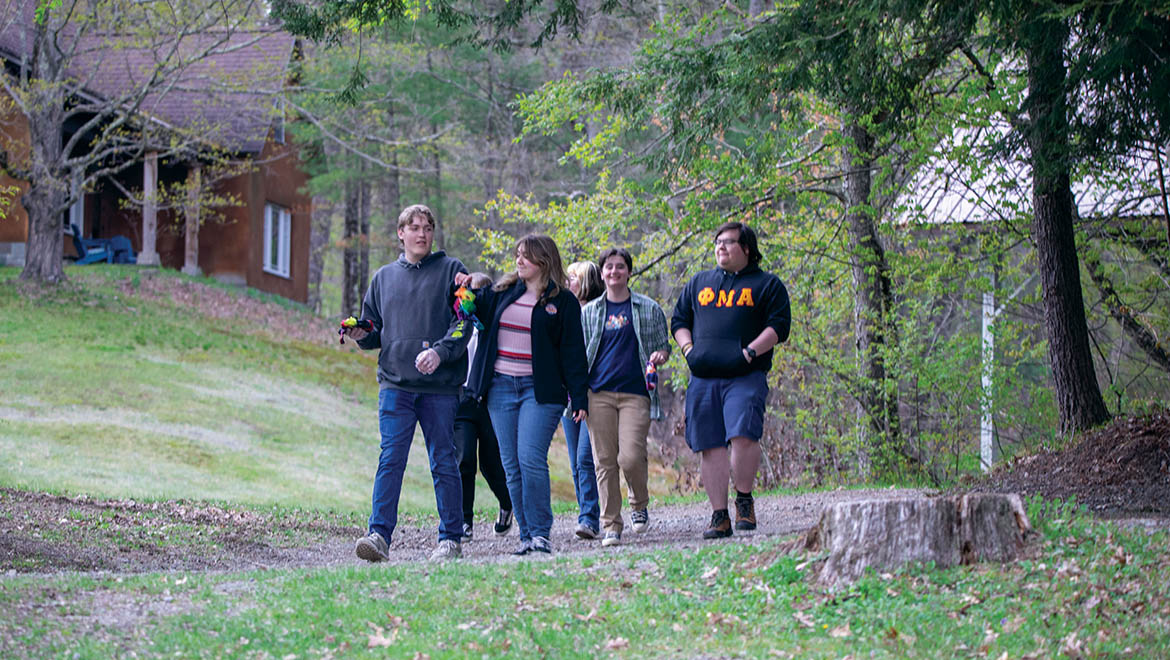
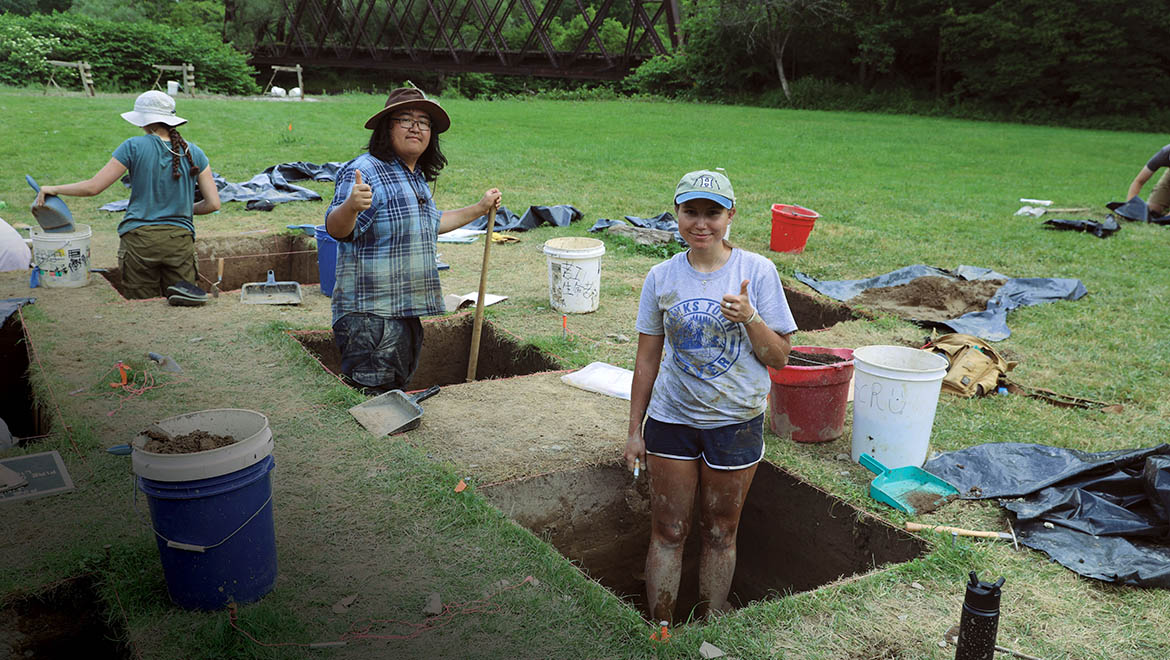
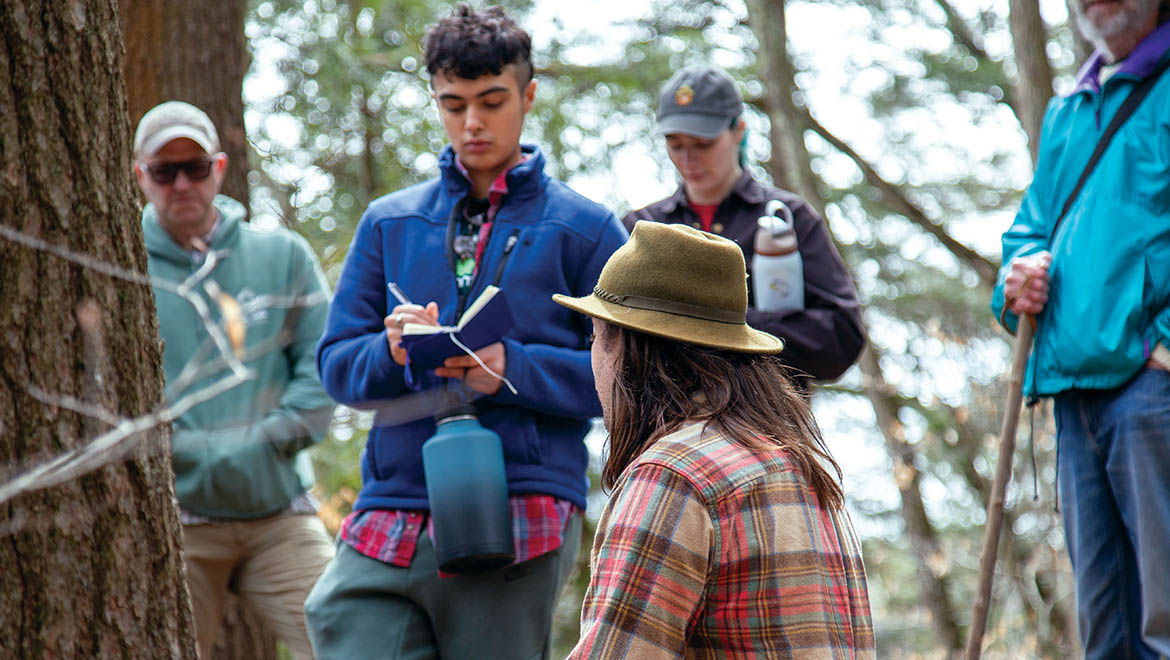
A biologist teaches students about the rising populations of an invasive crayfish species. An archeologist leads student excavation efforts on a Late Archaic site. A psychologist guides students on a “mindfulness walk” deep into the woods. These are just a handful of activities you might see on Hartwick’s 125-acre Pine Lake campus, eight miles east of Oyaron Hill.
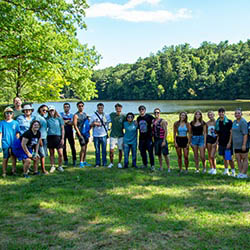
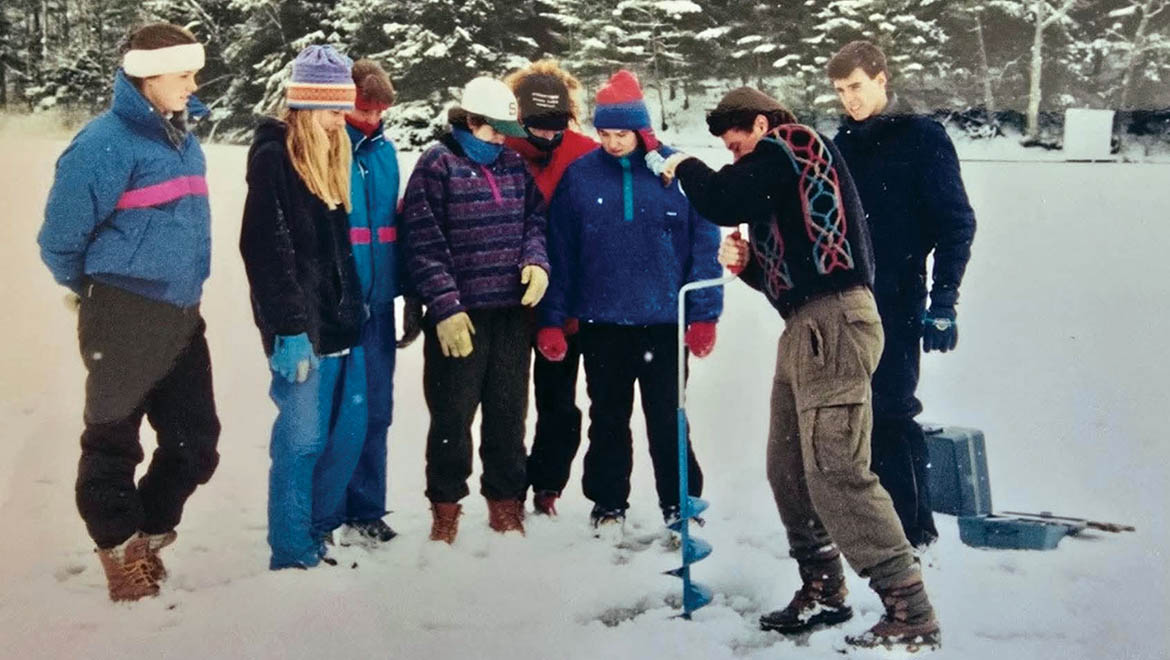
For 55 years, Hartwick has incorporated this four-season oasis into its academic and cultural curriculum, providing students opportunities for outside-the-classroom learning, hands-on research and self-discovery. It is a place to learn about the natural environment, its human history and, for many, personal journeys of the mind, body and spirit.
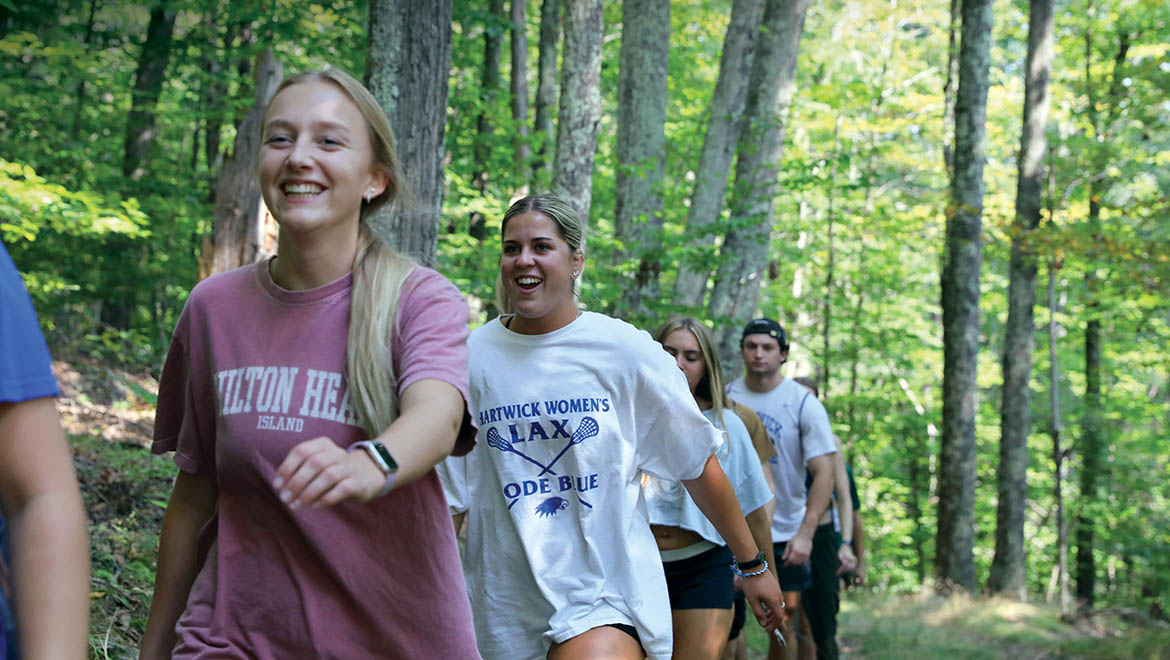
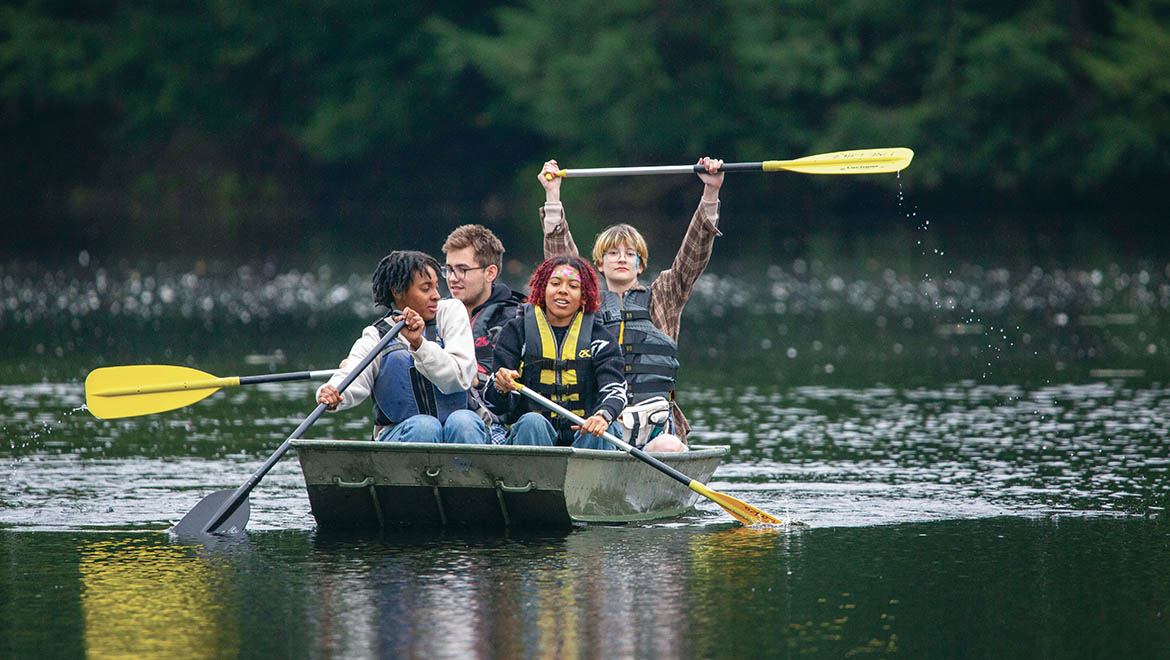
For decades, students and community members have come to Pine Lake for scholarly or personal motivations — conducting experiments, attending festivals or simply escaping the hustle and bustle of everyday life. Many spend weekends or longer stretches here, residing in Robertson Lodge or any of the 12 cabins onsite, some of which were built by the very faculty and students who most embraced the property. Others experienced it through company retreats and community events, taking advantage of its challenge course, vaudevillian theater and other forms of team building and entertainment.
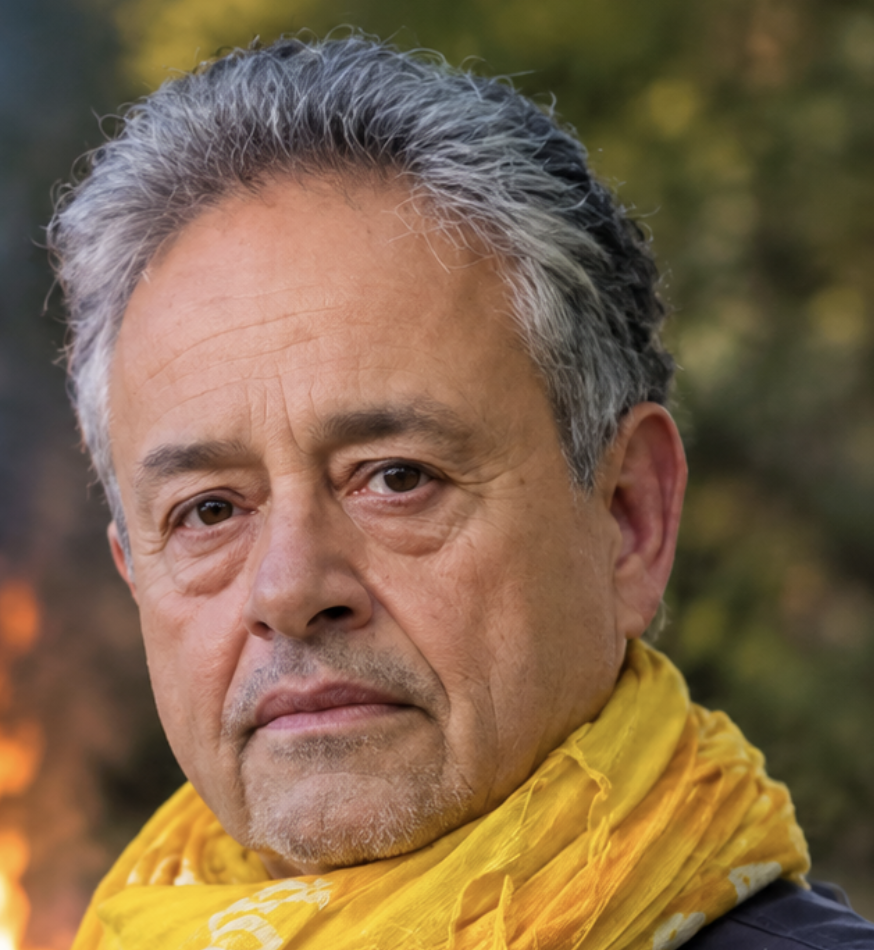
“Pine Lake is such a special place,” said Helen Deubler, whose father, Earl, was a long-time Hartwick professor, provost and interim president. He was among many faculty supporters of President Adolf G. Anderson and the Board of Trustees, who purchased the property on March 1, 1971.
As a child, she and siblings, David ’78, Barbara and Andrew ’87 were routinely onsite with their father and mother, Dottie.
“My whole family looked at it as a place of safety, where you could go and be at peace,” the second-oldest sibling recalled. “It was a place where I could hear my own heartbeat.”
RAISING ITS PROFILE
While Pine Lake’s impact on the College and region has been steady, its focus was recently sharpened through a strategic plan. The Hartwick community, working together, recognized its potential and called upon it to be an even greater point of differentiation and pride for the College.
That began with naming Matthew Sanford its executive director. Sanford and the team’s initial accomplishments centered on facility upgrades, repairs and sustainability initiatives. That includes being a Leave No Trace partner to minimize human impact on this natural environment and preserve it for future generations. Now, he has moved to academic and community program development, focused on four main pillars: wellness, outdoor education, wilderness skills and challenge education.
He’s also formed what he calls its core education team, which includes such experts as Andrea Thies, a former Olympic rower who coordinates its challenge education programs (zip lines, ropes courses, etc.); Jared Kapsiak, the campus caretaker who leads workshops in shelter-building, fire-making, primitive cooking and cordage (rope-making); Heidi Tanner, Hartwick’s director of wellness and health promotion, who leads yoga, fitness and hiking programs; and part-time faculty member Kathryn Smith, who leads dance and yoga classes.
Sanford, who also leads hiking, backpacking, navigation and snowshoeing workshops, sees Pine Lake as a living laboratory that teaches people how humans can sustain, rather than deplete, their resources through responsible stewardship.
“It’s always been a facility that engages students in outdoor recreation,” Sanford explained. “Now, we’re looking at it more holistically, seeing how we can best manage it and encourage people to come use it. We’re re-engaging with students, faculty and alumni as well as the local and regional community.
ACADEMIC INSIGHTS
Pine Lake has long been a bastion for faculty research and instruction as well. It was one of the first places Biology Professor Mark Kuhlmann discovered upon joining the faculty in 1997. His background was in marine ecology — studying lobsters, blue crabs and other crustaceans — and he was interested in learning about their freshwater counterparts.
“During my first two summers, a student research assistant and I drove around and sampled crayfish at various places,” he said. “We discovered that most of what we were finding were rusty crayfish (Faxonius rusticus), an invasive species to the region.”
Originally from Ohio and Southern Michigan, the rusty crayfish were steadily pushing out the native clearwater crayfish (Faxonius propinquus) from Pine Lake and nearby waters, eventually accounting for more than 90% of all crayfish Kuhlmann observed.
Unlike many invasive species, “rusties” have not had a major impact on the local ecology — but they are more abundant than the native crayfish they replaced.
“They reproduce a little faster and are slightly larger, which means they’re preyed upon slightly less — even though smallmouth bass still eat them like candy,” he noted.
That has led, in part, to them spreading up into the Susquehanna River and Charlotte Creek, which connects to the back boundary of Pine Lake’s property.
“Rusty crayfish can also cause small declines in other macroinvertebrate species through predation, competition or other effects,” Kuhlmann added. “Those are important for other species, including lots of fish, so there may be some effect on the ecology of streams that rusty crayfish have invaded.”
LEARNING FROM THE PAST
A less obvious discipline has been studied onsite even longer. The Pine Lake Archeological Field School has drawn students from across the U.S. to its immersive, four-week program for more than 40 years. A longstanding collaboration with SUNY Oneonta, the six-credit, upper-level anthropology course is held every other year in late May and June. Located on the flood plain of Charlotte Creek, students investigate prehistoric camp sites dating from the Late Archaic through Early Woodlands periods (c. 3000-200 BC) through the discovery and analysis of ancient artifacts such as projectile points and early ceramics.
The work qualifies students for employment in the field of cultural resource management (CRM), whose professionals are routinely called to construction jobs before digging occurs to identify whether or not the site may be archeologically significant. It is one of the most widely available careers for archeology and anthropology majors in the U.S. and Canada.
“It’s a job that’s very available without needing more than a bachelor’s degree,” explained Associate Professor of Anthropology Namita Sugandhi, who leads Hartwick’s portion of the collaboration. “We do a very good job teaching these students. We have a number of contacts at CRM firms, which gives them more career-focused summer job options as they complete their schooling. They’re a strong résumé builder.”
Silas Moyer ’26 can attest to that as the son of two contract archeologists, including his mother, Rebecca Moyer ’91, who took part in the same program when she was a student.
“One of the most important things happening on our campus is the opportunity to preserve this place,” he said. “We often find debitage, derived from the French, meaning to cut or saw. They’re essentially flakes of stone tools and weapons left behind as they were created. It’s critical to be able to identify those in the field because they’re often the most common findings.”
For many, the field school — one of the very few prehistoric field schools on the East Coast — is also a chance to see if the profession is a good fit, especially working in the elements.
“Working outside is not for everybody,” Sugandhi advised. “You kind of either hate it or you love it. You get that bug when you get out in the field. It’s hard, but it’s exhilarating.”
Another of Sugandhi’s perennial highlights is seeing the transformation of students as they grapple with Charlotte Creek’s challenging cell service.
“It’s so refreshing to work with students who don’t have their faces in their phones all day,” she said. “It’s a digital detox and most people lean into it. They usually love it by the end of the first week.”
The program’s timing is intentional, as the softer spring ground makes for easier digging, before the hot summer months set in. It also ensures that Pine Lake’s housing options are available to the program during a time when short-term rentals are at a premium due to the region’s baseball tourism.
Students gain first-hand experience identifying, excavating, recording and interpreting archaeological findings. The site contains artifacts from the earliest human times, as people began to settle in one place. In addition, it has been occupied seasonally for thousands of years, so it’s common to unearth items from various periods of time.
“In early periods, these societies were small-scale,” Sugandhi shared, “and it appears to be an intentional sustainability strategy. We often dismiss early civilizations as primitive and uneducated, but they actually show how very smart they were for their eras.”
Most of Pine Lake’s findings are subtle, like tiny stone tool fragments or stains in the soil.
“We’re looking for things that aren’t always obvious — organic remains, such as a post that disintegrated,” Sugandhi explained. “They’re far less obvious than a brick or stone wall.”
Because it has endured as a seasonal camp site for so long, they do unearth some more complete items on occasion, such as stone tools, fire-related features and artifacts, and early forms of pottery.
“The coolest thing I saw excavated was a Genesee point (arrowhead) that was broken into three pieces found across two [1’ X 1’ plots],” Silas said of a classmate’s discovery. “It was an extremely rare thing to find, a very impressive lithic.”
A FAR-REACHING IMPACT
Sugandhi, who has also worked for two decades at a site in northern Karnataka, India, says students in both countries are excited to understand prehistoric peoples and their cultural traditions. She’s also fascinated by the differences in each nation’s societal norms and how they impact archeological practice at each locale.
“Excavation involving human remains is shaped by different cultural norms and legal frameworks,” she explained. “In the U.S., such work is highly regulated and generally avoided, while in India, excavating ancient burial sites is allowed with fewer guidelines.”
Similarly, archaeological research is often conducted more systematically in the U.S., so Sugandhi has tried to bring many of the excavation methods of Pine Lake’s colleagues to her field site in India.
“Training opportunities are very rare for archaeology students in India, so I’ve taken the Pine Lake model and tried to replicate it there at my site,” she added.
LEARNING IN SURPRISING WAYS
Although Pine Lake has long been popular among those looking to escape the everyday hustle of life, more recently, its psychological and mental health benefits have become incorporated into the academic curriculum.
One of its biggest advocates is Psychology Professor Lisa Onorato. A cognitive psychologist, she studies the human mind, focusing on problem-solving and creativity. Each fall, she leads a course called the Psychology of Creativity, designed to help students understand the concepts and principles of creativity and cognitive neuroscience.
“Students will tell me they’re not creative, and that’s always a red flag — because of course they are,” said Onorato. “So, one of the course’s goals is to help give them confidence. Then we provide them with techniques to spark their own creativity.”
Onorato arranges for a shuttle to transport the students — literally going the extra mile to provide a memorable experience for her learners.
“One of the main findings is that you’re more likely to be creative when you’re in a relaxed frame of mind,” she advised. “That’s why people come up with great ideas while driving or in the shower.”
Research also shows that being in nature is one of the best things one can do to relax. Thus, the course mixes traditional classroom assignments with an outdoor setting. For instance, students are asked to write a poem — and encouraged to walk along the lake and trails to help overcome writer’s block. They use meditation as a tool to assist them with a drawing assignment. They create a play based on a found object activity, incorporating pinecones, rocks, feathers and the like into their storylines. They build campfires to help with a comedy improv activity, which helps students feel much more relaxed and willing than they do in a classroom.
Mindfulness is a key component throughout the course. Each class begins with a meditation period, and each student is responsible for leading one during the course. Activities include walking, tai chi, dance and yoga, with the Vaudevillian building serving as a safeguard against any bad weather.
It’s a “kooky course,” Onorato says, inspired by such readings as The Zen of Seeing — an “old hippie book,” she jokes. Yet it works, time and again, winning even some of her most skeptical students over.
It’s not hard to relate to. Who hasn’t stared at the clouds and seen shapes that remind us of animals or people? There’s a term for that, Onorato shared: pareidolia. It also applies to patterns seen in tree bark, rock formations and other natural settings.
“When we’re more mindful, we tend to see things in a different way,” she advised. “Just sitting on a floor instead of at a desk can put us in a different frame of mind.”
ADDING TO THE LEGACY
Kuhlmann, Sugandhi and Onorato join the many faculty who have found ways to merge their syllabi with the outdoor campus since 1971 and the dozens more who just invited students to join them in their free time. Year after year, those students left Oyaron Hill with an extra set of memories and an extra sense of devotion to the College. Recently, Hartwick took steps to further bolster its academic focus by naming Environmental Science and Sustainability Lecturer Timothy Vatovec ’03 as faculty liaison to Pine Lake. He will work with faculty through course planning, academic retreats and other concepts.
“For decades, academic programming has been one of the most effective ways to introduce students to the campus,” said Philanthropy and Engagement Officer Joe Ficano. “Once they’re out there, something magical happens. They become fans for life, and the bond they form with their alma mater becomes virtually unbreakable.”
That sentiment resonated within the Deubler family, inspiring them to establish the Pine Lake Trail Maintenance Fund in 2023, along with a memorial for their father near the lake’s southern shore. It is a modest stone and plaque, atop of a hill overlooking his favorite fishing spot on the lake.
“It quietly captures his spirit and connection to Pine Lake in a peaceful, meaningful way,” Deubler reflected. “Hartwick was an exceptional gift from my father…a tremendous gift that he gave to his family. Hartwick gave him a tremendous gift too: the gift of purpose. The ability to have such an impact. We’re fortunate to be able to honor that legacy.”
EXCITED FOR WHAT’S NEXT
Sanford is happy with the momentum he and his team are seeing, especially among weekly workshops and seasonal events. An Indigenous program took place in April, which included a history of the land and a walk led by members of the Mohawk Nation. First aid and CPR/AED classes are gaining popularity as well. Spring Fest, a student favorite for decades, returned from hiatus in 2025. It took place again on May 3. The team’s Harvest Fest, Fall Fest and Frost Fest also drew many attendees, and they are currently planning a major Summer Fest to celebrate Pine Lake’s 55th Anniversary.
They have added team-building exercises for area businesses, organizations and K-12 groups, some of which can be completed in as little as 45 minutes. They are working with the Catskills Regional Teachers Center to develop lesson plans that make the trails more accessible and ensure the workshops align with state curriculum requirements. They have also joined the Regional Trails Summit in Otsego County, which gives them access to in-kind services such as trail maintenance and chainsaw certification.
“These initiatives have resonated significantly with our alumni and the local community, a synergy that sits at the very heart of our mission,” Sanford reported. “We’re seeing a remarkable surge of momentum on campus; the breadth of our activity is translating into tangible, far-reaching impact.”
Regardless of what draws people there, once exposed to Pine Lake, they are impacted by its surroundings, and they take those experiences with them long after they leave.
“It changes students,” Sugandhi said. “It builds grit and you need that to survive in life. It pushes them outside their comfort zones. Even if they don’t go on to work in archeology, this experience changes them and is valuable in their development. I enjoy watching them toughen up — and then blossom — over the course of just a few weeks.
“There’s just something about it,” Deubler agreed. “Hartwick is a small campus with a really big hug, and Pine Lake is very much part of that emotion. You feel enveloped into its landscape. It almost feels…sacred.”