

Sociology Symposium
The Unsettled World: Social Change, Conflict, and Collective Futures
Saturday, April 3, 2027
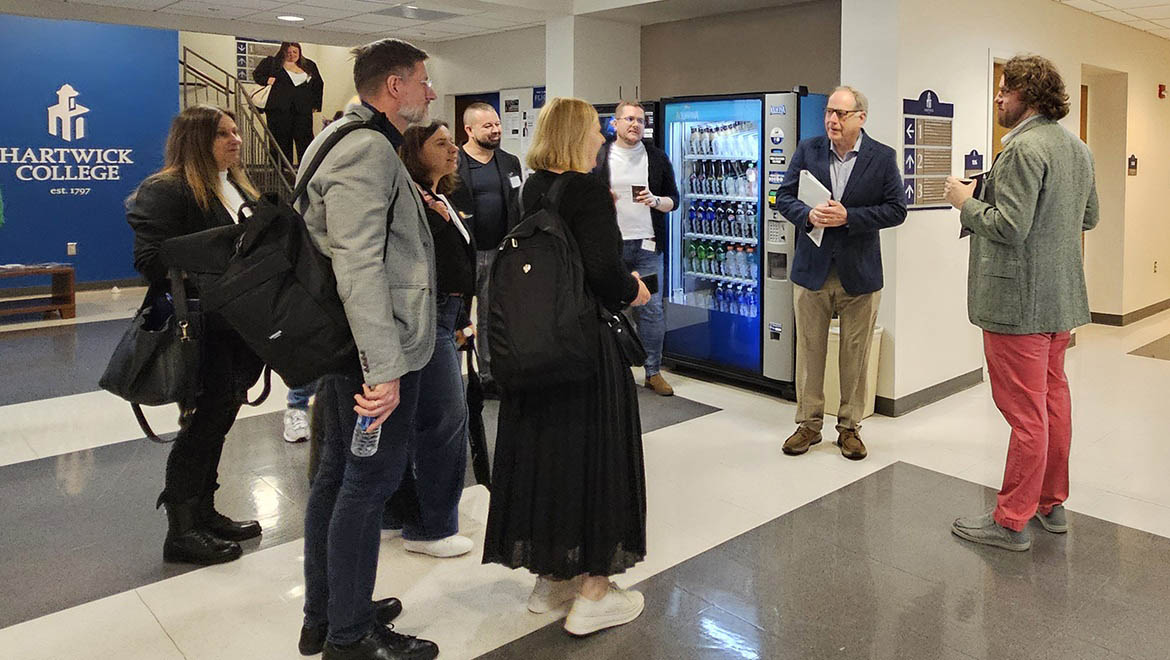
The Department of Sociology, Criminology and Human Services at Hartwick College is proud to organize its third biennial symposium for social scientists.
The title of this year's symposium is The Unsettled World: Social Change, Conflict, and Collective Futures.
We invite all proposals, especially from undergraduate students, graduate students, and early career faculty in the Upstate New York area, to join us to discuss contemporary social issues, share ideas and opinions, and build a community of scholars.
2027 Symposium Topics
The 2027 Social Sciences Symposium, The Unsettled World: Social Change, Conflict, and Collective Futures, invites scholars, students, and practitioners to reflect on the shifting social, political, cultural, and economic conditions shaping contemporary life. Across local and global contexts, institutions, identities, and relationships are being contested, reconfigured, and reimagined. In an era marked by accelerating change, intensifying and emerging social and political conflicts, and uncertainty about what the future holds, the social sciences provide critical perspectives for understanding how societies are structured, sustained, and transformed.
The symposium welcomes submissions that explore processes of social change and stability, expressions of conflict and cooperation, and the ways individuals and communities navigate uncertainty in their social worlds. Contributions may be theoretical, empirical, methodological, or applied and may engage any area of social-scientific or interdisciplinary inquiry. We welcome work from sociology, anthropology, criminology, education, gender studies, history, philosophy, political science, psychology, public health, religious studies, and other areas of social scientific inquiry.
In keeping with the theme, The Unsettled World, the symposium seeks to create space for dialogue across subfields, disciplines, and perspectives, with particular attention to how people, communities, and institutions understand and shape possible futures.
Conference registration is $20 per participant. A registered link will be emailed to all accepted presenters.
Proposal Guidelines
You may submit abstracts of individual papers for potential inclusion in a regular paper session. These abstracts will be organized into sessions by the members of the Program Committee on the basis of common themes. All regular paper submissions should include: (a) the title of the paper, (b) names, affiliations, and contact information for each author, and (c) an abstract. Abstracts should be approximately 200-300 words.
All full session proposals must include a short abstract 300-400 words detailing the theme of the proposed session. This should include a brief description of the session’s prospective appeal and/or connections with the 2027 meeting theme. All areas of sociology are welcome! You must include full details for all participants including submission title, submission type, abstract, three keywords, name, institution, email, and position. Participants include the presider and organizer, in addition to the presenters or panelists, and discussant, if included.
Symposium FAQ
Discussants are responsible for reflecting on the papers or abstracts that they have received prior to their session. In turn, discussants are expected to lead the discussion by raising interesting points, asking questions derived from the presentations, or finding connections between the papers included in the session. The Program Committee will coordinate the discussant for each session and ensure that you receive some written material prior to the symposium.
No. This symposium will have only in-person options. Attendees will be asked to follow health and safety measures as directed by the Center for Disease Control and Prevention and the College.
No. Papers are not required for the initial submission. However, if you are interested in having your work be considered for the Undergraduate Student Paper Award, a full paper will need to be submitted according to the guidelines above.
The Program Committee will notify all submitters of their program participation.
Projectors, screens, and a sound system will be available for all sessions. However, presenters and/or session organizers should plan to bring their own laptop. We recommend saving an additional copy of your work to a USB drive in case you need to use another participant’s laptop. If you plan to use video clips in your presentation, we request that you include closed captions and/or audio descriptions.
Yes! Internet access will be available in all meeting spaces in Golisano Hall.
Abstracts must be submitted by 05:00 p.m. ET on March 14 to be considered. All program participants must register for the symposium by TBD. Failure to register by TBD will result in deletion from the final program.
Non-Hartwick affiliated participants and attendees can register by following this link. 2027 link coming soon.
Hartwick students can register by following this link. 2027 link coming soon.
2027 Keynote Speaker - Joya Misra
Joya Misra is a Distinguished Professor of Sociology and Public Policy at the University of Massachusetts, Amherst. She studies intersectional inequalities affecting workers and policies at both the workplace and societal levels that can mitigate them. She is an award-winning researcher, teacher, mentor, and public sociologist. In the discipline, she has served as Editor of Gender & Society (2011-2015) and President of the American Sociological Association (2023-2024). Joya currently serves as the co-editor of American Sociological Review. She recently received the 2026 Jessie Bernard Award for research that encompasses the role of women in society.
Walking Mannequins: How Race and Gender Inequalities Shape Retail Clothing Work
Misra’s keynote address is titled Walking Mannequins: How Race and Gender Inequalities Shape Retail Clothing Work. In the twenty-first century, low-wage retail clothing work has changed dramatically, with the increasing deployment of surveillance technologies allowing “justintime” production and constant monitoring of worker activities. Rather than rewarding workers with strong customer service skills, employers increasingly view workers as expendable, putting little effort into training or retention. Youthoriented clothing retailers emphasize branding and style to appeal to popular, ofthemoment, influencers and ask their workers to represent that style. At the same time, these workplaces remain mired in the past: race and gender inequalities are reinforced rather than disrupted, worker precarity is increased, and the “style” work prized by clothing retailers continues to impose norms that heighten inequality. Retail clothing provides a prism through which to understand troubling twenty-first-century workplace dynamics in this unsettled world.
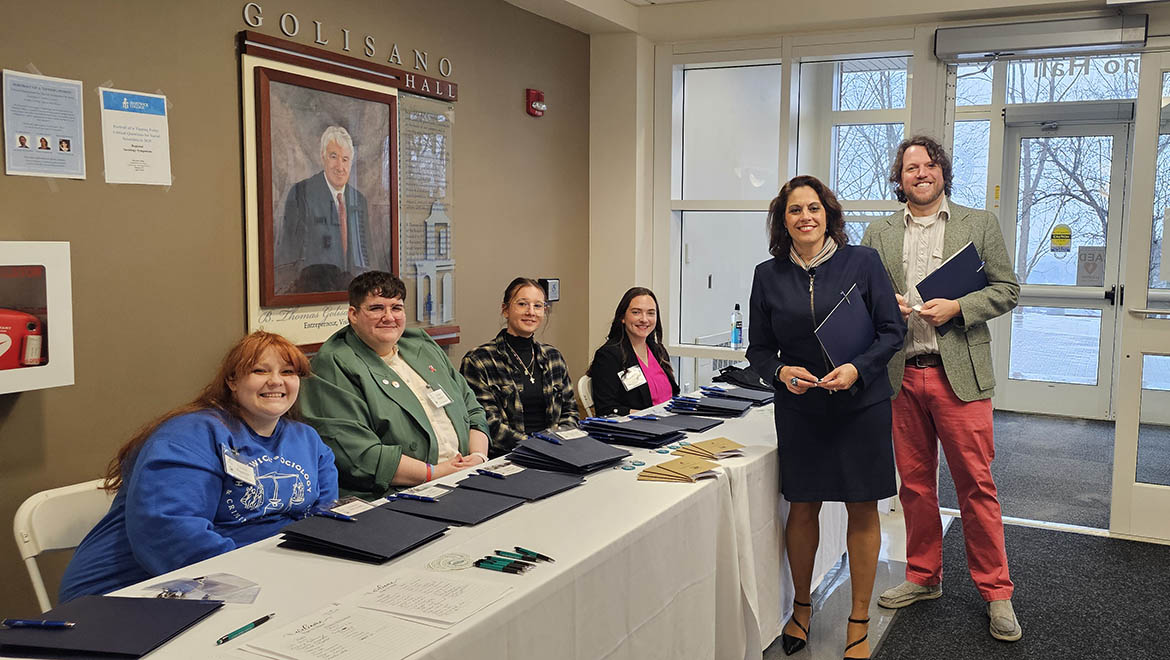
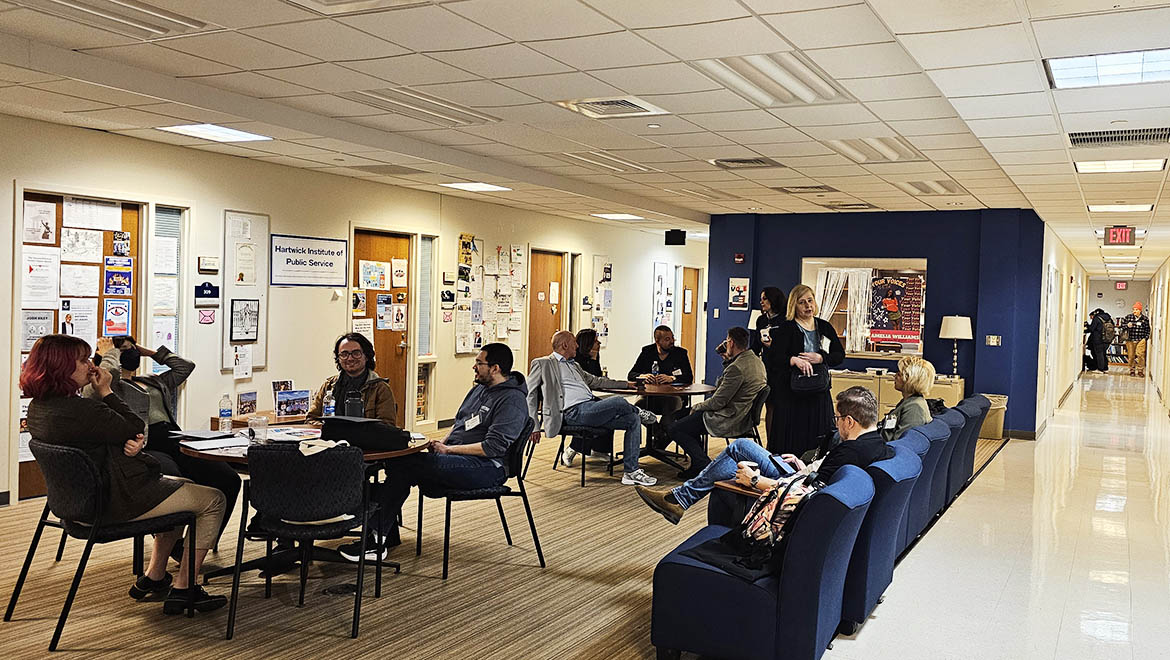
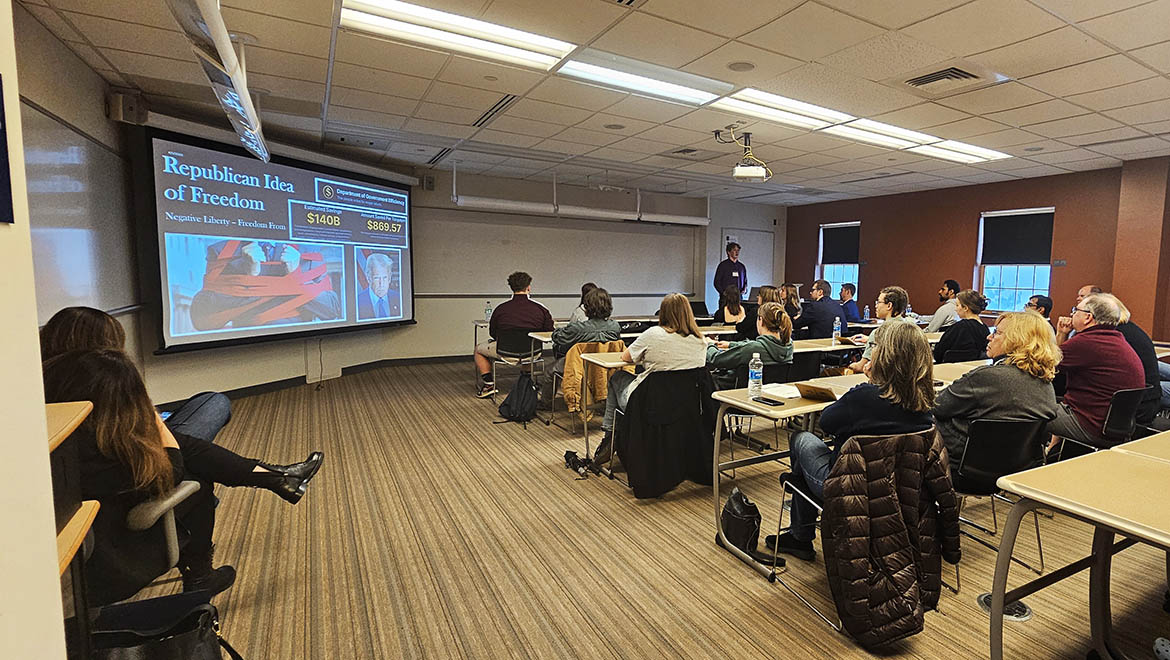
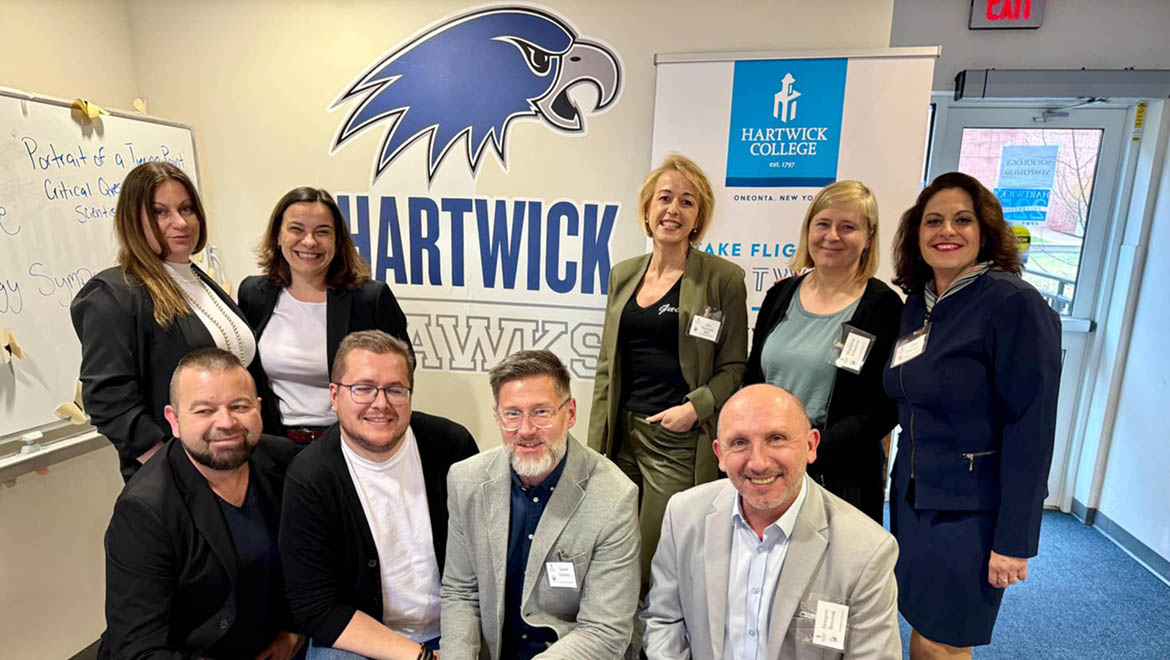
“It was so great to see what professionals are doing at other colleges and universities, but also to see the great work that other students are doing as well.”
Indigo Shepard ’27
Sociology Major, Gender and Sexuality Studies Minor
“It was inspiring to see students, faculty, and guests come together to engage with important issues like migration, inequality, and the future of democracy. I’m especially proud of our students who not only presented their research but also helped make the event happen behind the scenes.”
Dr. Elena Chernyak
Associate Professor of Sociology and Department Chair

“My favorite part of this event was being able to watch young scholars and undergraduate students present their research, along with getting an opportunity to host huge names in the field of sociology.”
Dr. Zachary McKenney
Assistant Professor of Sociology

“This symposium was another opportunity for me to demonstrate all the valuable oral and interpersonal skills I have learned from my time at Hartwick while forming connections with other academics in the sociological discipline.”
Tianna Wyskowski ’25
Sociology & Criminal Justice Majors, Anthropology Minor
“I will take the skills I observed and learned from this experience into my graduate program and my career. The professors in the sociology and criminal justice programs have been incredible and guided me to be the best version of my academic self, and I wouldn't have felt as prepared to present at this conference if it weren't for them.”
Giovanna Wall ’25
Sociology Major, Art and Psychology Minors