Freedman Prize Supports Science Education Research
Andrew Daisernia ’26 is exploring new ways to bring science to life in the classroom through hands-on, inquiry-based learning.
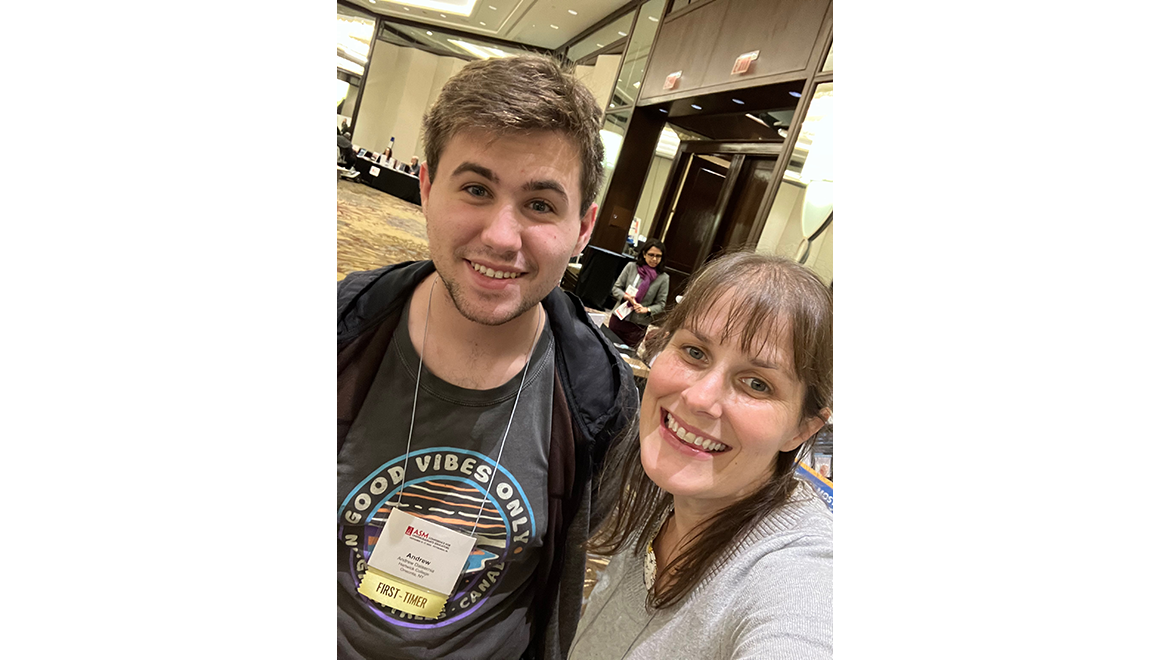
A biology and education major at Hartwick College, Daisernia worked alongside Associate Professor of Biology Stephanie Carr ’06 to develop a case-study-based lesson plan designed to help students better understand complex biological concepts.
The project centers on students scanning QR codes to investigate subsurface microbes and construct their own phylogenetic models. The approach encourages students to engage directly with scientific data rather than relying solely on lecture-based instruction.
Daisernia said the idea grew out of a shared research experience.
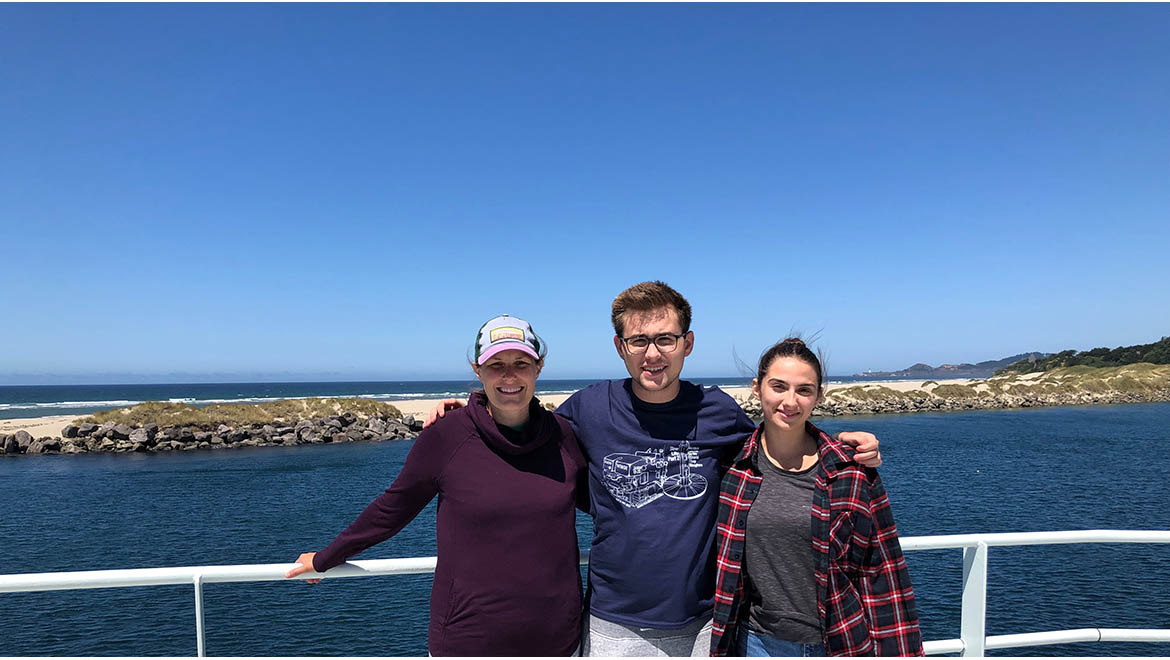
“This project began in the summer of 2023 when Professor Carr and I traveled off the coast of Oregon to the Juan de Fuca Ridge and spent about a week on a research vessel investigating deep-sea microbiology,” Daisernia said. “From that experience, we wanted to challenge traditional lecture-based learning and explore whether case study-based learning could better support student performance.”
The project also incorporated a technological component with support from Emmy Sema ’25, a computer science major who helped develop the QR code system used in the lesson plan. The codes represent DNA sequences that students can scan and analyze, creating an interactive bridge between technology and biology.
Although data collection is ongoing, early findings have offered valuable insight into how students learn.
“Overall, we found that both groups of students performed well, but questions involving phylogenies showed higher performance when students used the case study approach,” Daisernia said. “That suggests this type of lesson may be especially effective as a reinforcement tool and I believe, it may be even more impactful at the high school level.”
Carr noted that the project demonstrates how research can connect with career preparation.
“I am thankful that the Freedman Prize gives students an opportunity to explore projects that align with their career aspirations, in Andrew’s case, science education,” Carr said.

“As with many careers, there is a need for leaders to design projects, write proposals and advocate for funds. With this experience under his belt, Andrew will be entering the workforce knowing he has these skills."
Stephanie Carr ’06
Associate Professor of Biology