From Service to Campus: Hartwick’s World War II Veterans
The impact of World War II reached every corner of Hartwick College.
Following the attack on Pearl Harbor in 1941, scores of students enlisted or were drafted into military service. By 1943, the College’s enrollment had dropped by 40%. Some never returned.
The 1945 “Oyaron” yearbook included a section dedicated to Hartwick students serving in the military, while a December 1944 issue of “Hilltops” reported that Edmund L. Dornburgh ’43 was missing in action. His mother, Mary Dornburgh, established an endowment in 1945 to provide an annual award to a Hartwick history major in his memory.
For those who returned, Hartwick was a very different place. Within a year of the war’s end, enrollment more than tripled as veterans took advantage of educational benefits through the GI Bill of Rights. By 1950, 76 of the 117 graduates were veterans.
The returning veterans also transformed campus life. To accommodate the influx of students, including those with families, Hartwick purchased prefabricated buildings formerly used at Army and Navy bases. Shipped to campus in 1946, the structures provided temporary housing for many of the veterans and became affectionately known as “Splinterville” and “Fertile Valley.”
Their individual stories remain part of Hartwick’s history, from James Nicholas Georgeson ’48, who returned after serving in the Army Air Corps to earn a history degree and later became Oneonta’s mayor, to Gordon Roberts ’47, who interrupted his education to fly 66 combat missions in a B-24 bomber.
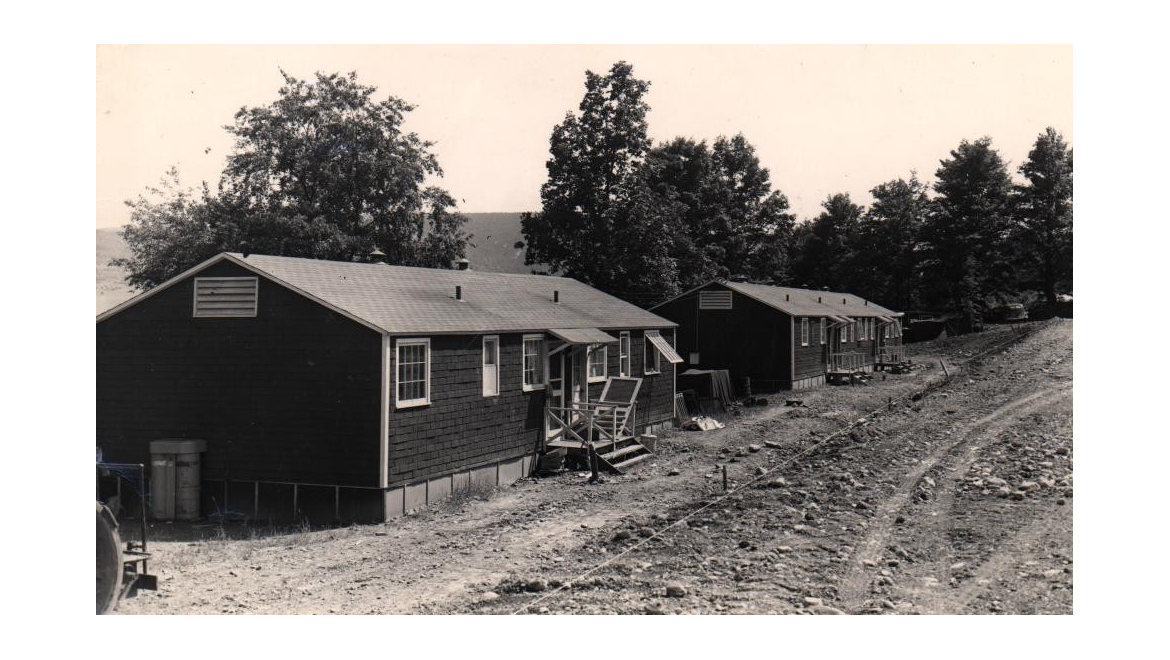
To accommodate the swelling numbers of students, including some who came with families, the College purchased prefabricated structures formerly used at Army and Navy bases. The structures were dismantled and shipped to campus in 1946, where they provided temporary living and learning spaces at a time when the College could not afford to undertake major building projects.
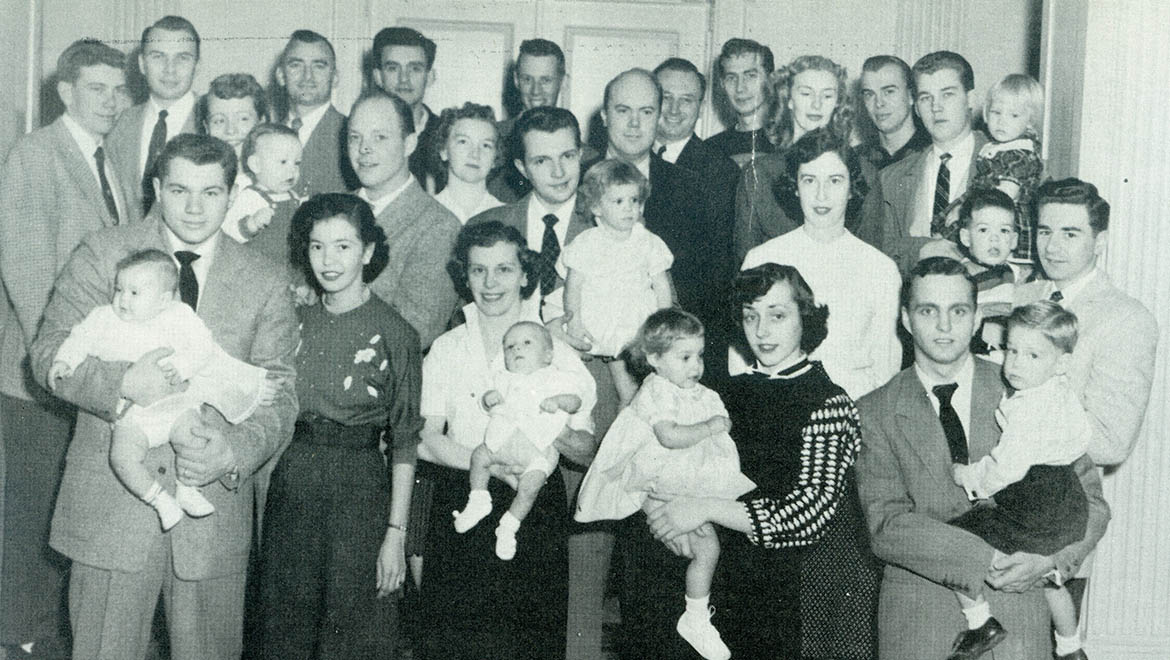
These prefabricated buildings, often occupied by the married GIs and their families, were known affectionately on campus as “Splinterville” or “Fertile Valley.”
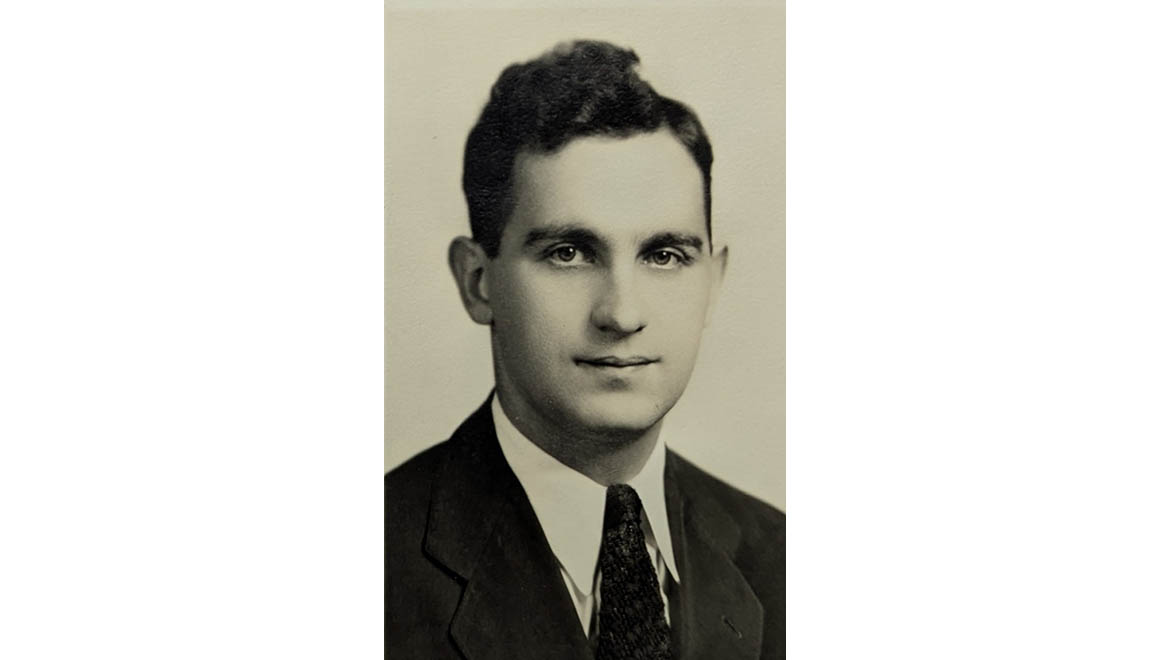
James Nicholas Georgeson enrolled at Hartwick College in 1940 and left in 1942 to serve in the Army Air Corps as a supervising officer during the war. James, or “Zaz” as he was known on campus, returned to Hartwick in 1946 and graduated with a history degree in 1948. He had a long and distinguished civic career in the area, serving as Oneonta’s mayor from 1960 to 1962. In 1987 he was recognized as Hartwick’s Outstanding Citizen of the Year.
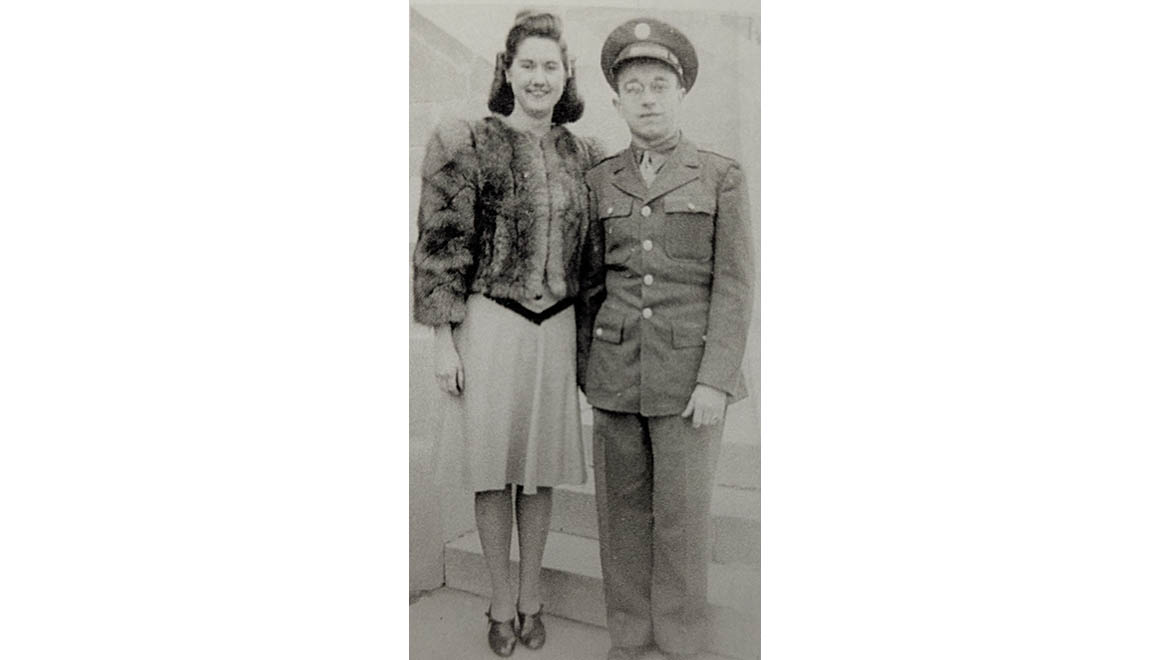
Before graduating as one of only 12 members of the class of 1945–the smallest in Hartwick’s history–Laura Dietz married Norman Roper, a Hartwick administrator called to duty with the US army.
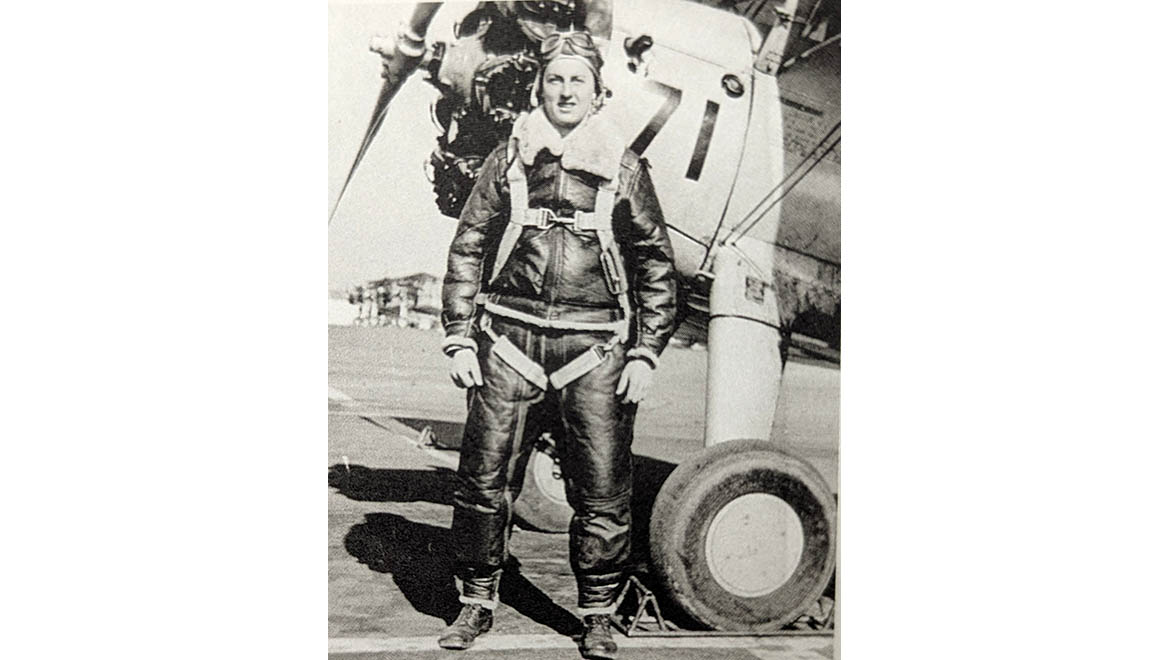
Gordon Roberts ‘47 is pictured standing next to the first plane he flew in the Army Air Corps. He interrupted college to fly 66 combat missions in a B-24 bomber.
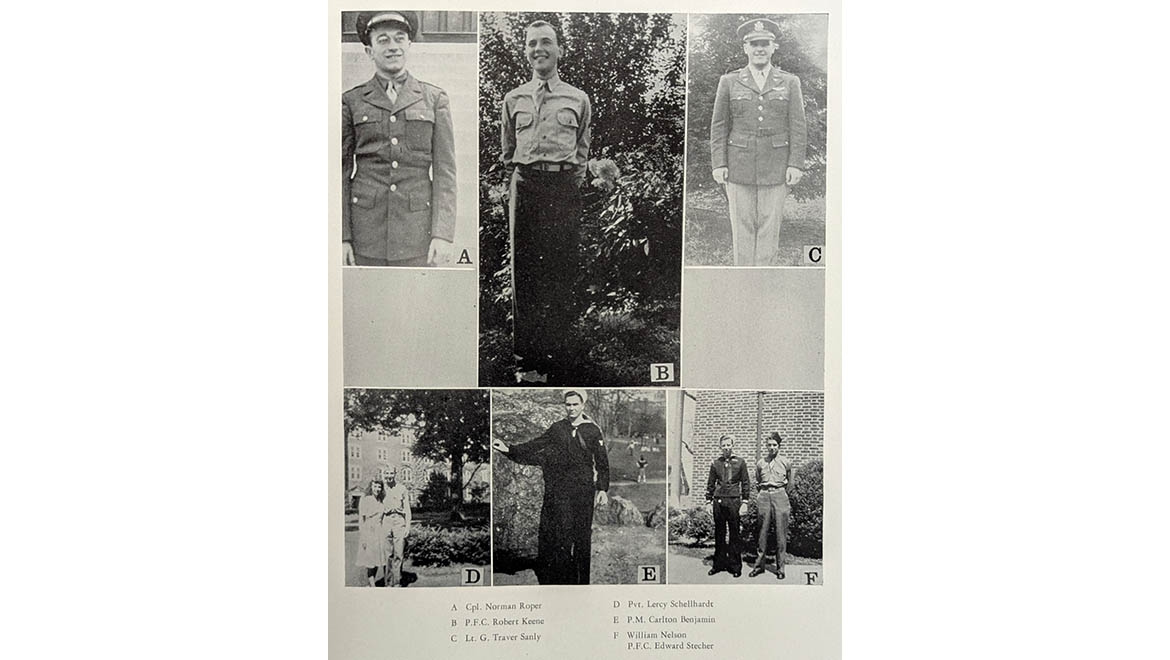
The 1945 Oyaron yearbook had a section dedicated to Hartwickians in uniform.
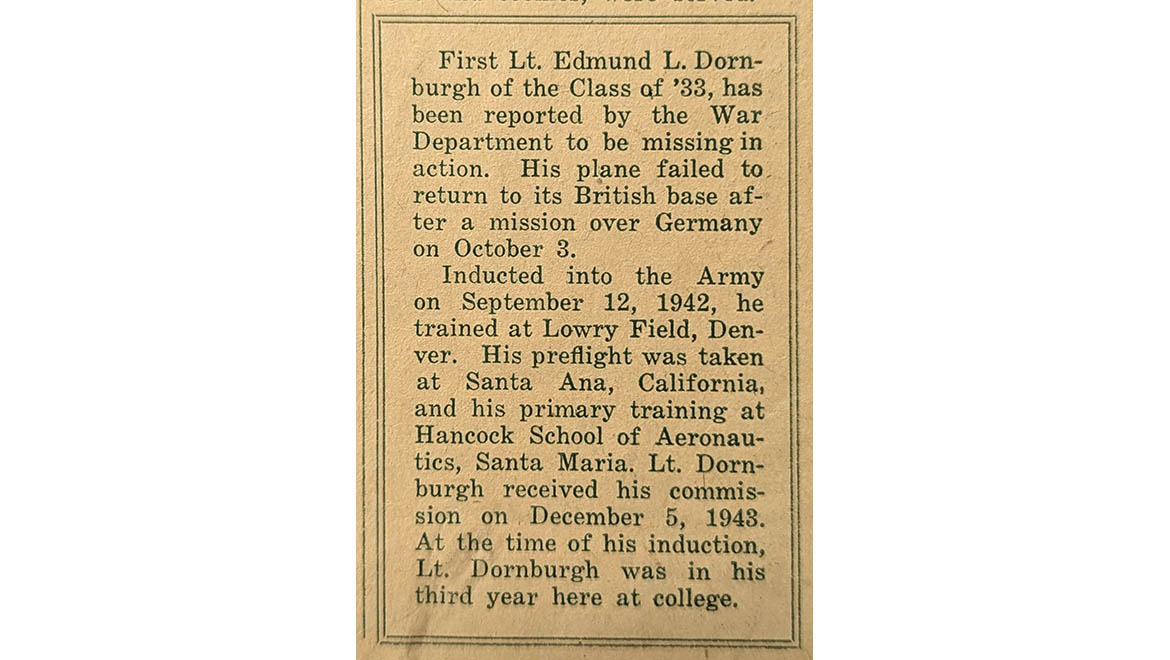
A clip from the December 19, 1944 issue of Hilltops announcing that Edmund L. Dornburgh of the class of 1943 was reported as missing in action. In 1945 Mrs. Mary Dornburgh established an endowment for an annual award to be given to a Hartwick history major as a memorial to her son, who was working as a student assistant in the history department when he was called to serve.
Photos are part of the collection in Hartwick College Paul F. Cooper, Jr. Archives.