When Learning Meets the Real World
Simulation strengthens emergency preparedness while improving care for the developmentally disabled.
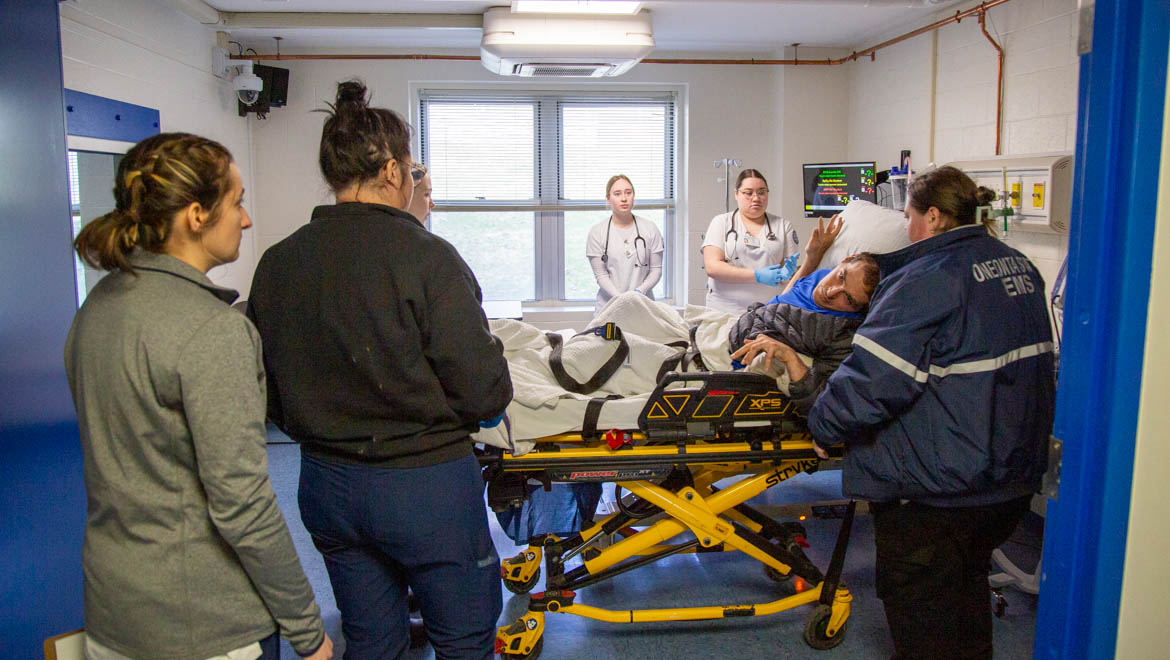
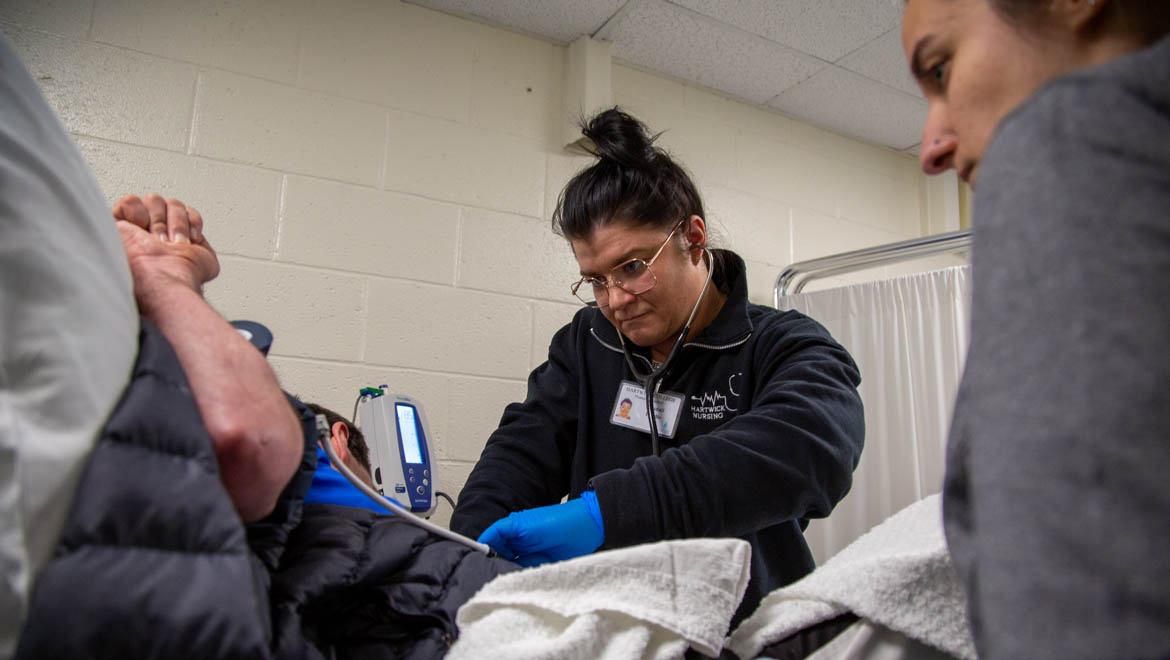
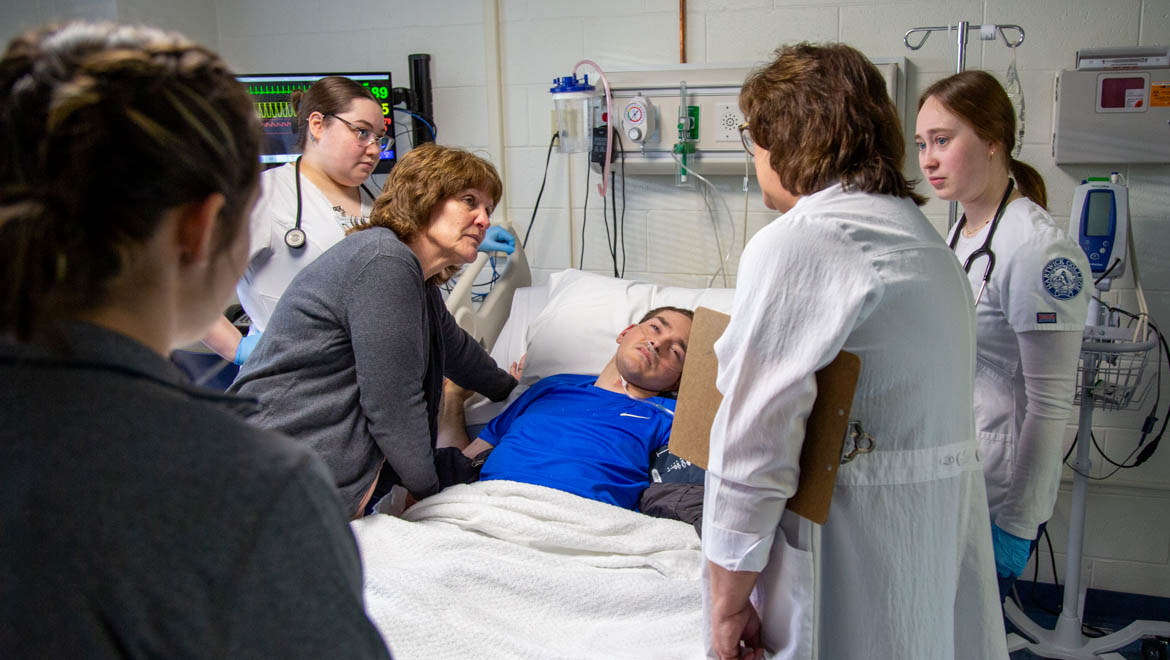
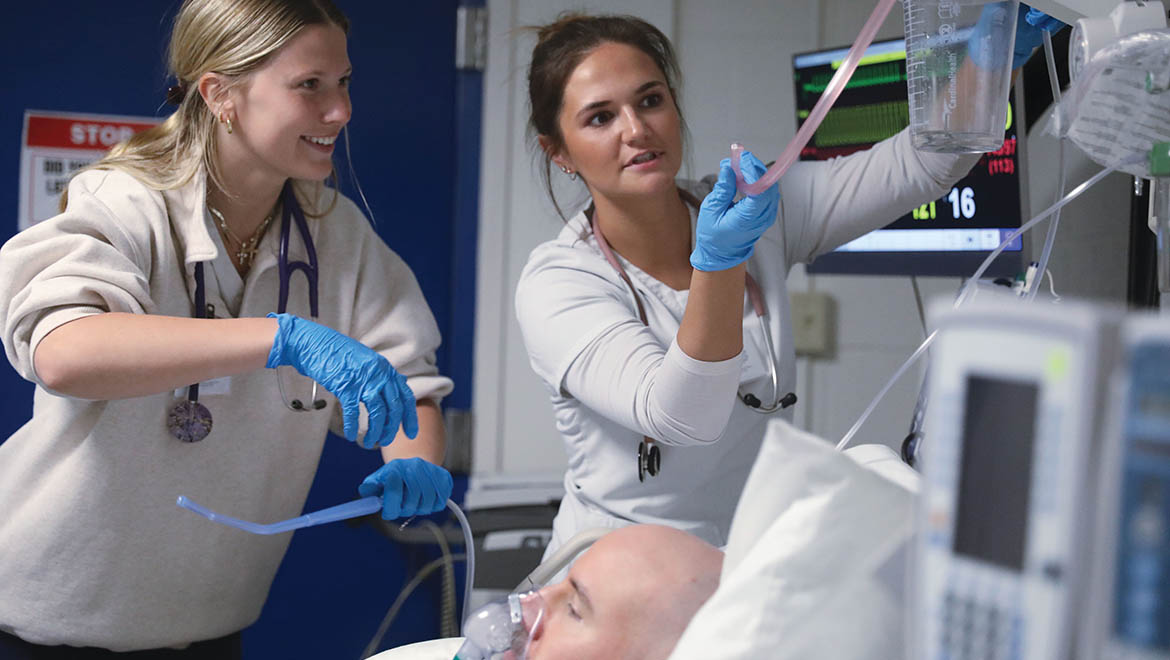
Emergency lights flashed outside of Smith Hall as firefighters, police officers and EMS personnel moved quickly through the building. Inside, Hartwick nursing students assessed patients, communicated with responders and worked through the pressure of a complex medical emergency.
For a moment, it felt very real.
The scene was part of a large-scale emergency response simulation organized by Hartwick School of Nursing Clinical Assistant Professor Lisa Depperman. The training served as the capstone project for Depperman’s 2025–26 Golisano Fellowship in Developmental Disability Nursing, a year-long program dedicated to improving care and health equity for those with intellectual and developmental disabilities.
Depperman designed the simulation to address a gap she has observed in research and practice.
“First responders and healthcare providers often don’t have much experience communicating with or caring for individuals with developmental disabilities,” Depperman said. “That can lead to misunderstandings, safety concerns and barriers to care.”
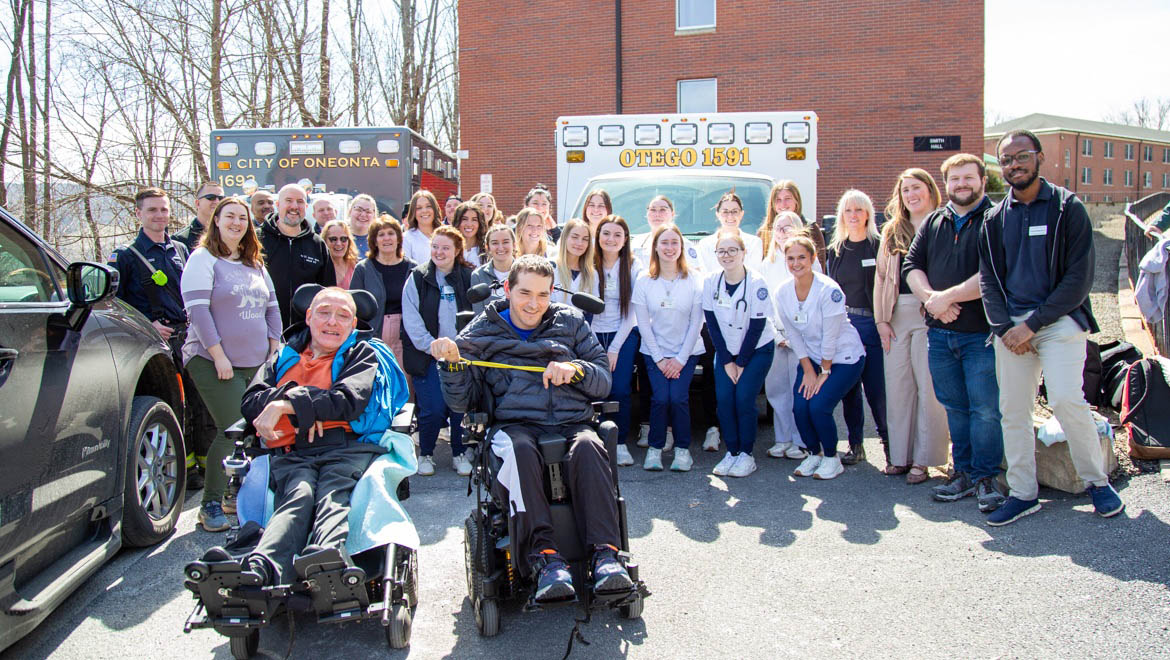
To address that challenge, the exercise intentionally included disabled individuals and their caregivers as participants in the simulation. Their presence allowed responders and students to experience firsthand the communication strategies, patience and awareness needed to provide effective care.
“People sometimes make assumptions about individuals with disabilities that are simply not accurate,” Depperman said. “Having them participate in the simulation creates an opportunity for everyone involved to learn directly from their experiences.”
The event brought together a wide network of partners from across the Oneonta community. Responders from the Oneonta Police Department, Oneonta Fire Department, Otego Emergency Squad and New York State Electric and Gas joined Hartwick campus safety personnel and SUNY Oneonta’s volunteer EMS squad in the coordinated training effort.
For students preparing to enter healthcare careers, the experience offered a powerful glimpse into the realities of emergency medicine.
Meagan Witte ’26, a student in Hartwick’s advanced medical-surgical nursing course, said the exercise helped bridge the gap between classroom learning and real-world practice.
“The nursing field is unpredictable and chaotic,” Witte said. “Being exposed to an emergency simulation helps build confidence and prepares me to intervene appropriately in high-stress environments.”
The simulation also highlighted the importance of collaboration between agencies and healthcare professionals.
“Being part of this experience showed the importance of unity and teamwork among first responders,” Witte said. “It was an honor to collaborate with the Oneonta community and better understand how everyone works together during an emergency.”
That cooperation is exactly what local emergency officials hope to strengthen through exercises like this. Assistant Fire Chief Tim Foster said the opportunity to train alongside healthcare providers and students provides important preparation for complex incidents.
“Conducting a simulated incident allows responders to practice coordination in a controlled environment,” Foster said. “It reinforces key principles like incident command, patient triage and communication between field responders and medical facilities.”
Foster added that the true value of such training lies in building familiarity between the people and organizations that would work together during an actual emergency.
“When agencies practice together ahead of time, responders become more familiar with one another’s roles and decision-making processes,” he said. “That familiarity improves efficiency and safety during real incidents.”
For Hartwick, the exercise reflected the kind of experiential learning that defines the College’s Life Balance approach, blending academic preparation with meaningful engagement in the world beyond campus.
For Depperman, the project’s impact extends beyond the simulation.
“I hope participants left with new ideas, new perspectives and a deeper understanding of how we can care for individuals with developmental disabilities,” she said. “But just as important is the sense of community this experience creates and that we’re all working together to make our community safer and stronger.”