Rozene’s Work Highlights Pots As Intersection of Art, Cuisine, and Health
The pot you cook in, Stephanie Rozene, professor of art, is learning, can make can make all the difference.
“You can take your great-grandma’s tortilla recipe, but you can never really recreate it 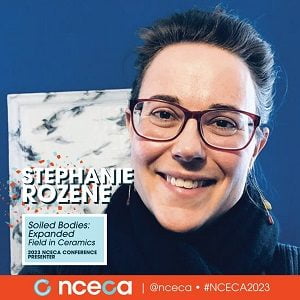 authentically if you’re using metal cookware,” she said. “Metal pots give a metallic taste to the ingredients.”
This past summer, supported by a Hartwick Faculty Research Grant, she worked with Shawn Hansen ’22 and chefs at the Hambidge Center for the Arts in Georgia to recreate prehistoric cooking techniques with clay vessels.
Among the dishes were local trout wrapped in wet clay and roasted over a fire, barbacoa buried in a fire pit, and nixtamalization – a traditional maize preparation process that cooks dried kernels in an alkaline solution.
“It changes the nutritional profile of the corn,” she said. “It allows vitamin B to be better absorbed by our bodies.”
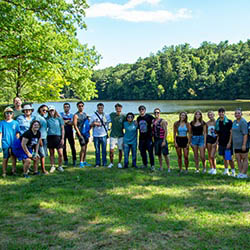
She demonstrated some of these techniques at Pine Lake during the fall semester, and next month is taking this work to the National Council on Education for the Ceramic Arts Conference in Cincinnati. Her pots will be on display in a “Cooking and Clay Collaboration” exhibition.
Additionally, Rozene will be featured in the “I Contain Multitudes” National Exhibition, showing her piece, “Truth or Spectacle?II” from her Politique Rhétorique body of work, as well as giving the lecture, “’Soiled Bodies:’ The Expanded Fields of Ceramics,” with Ina Kaur.
“We want to bring awareness to contemporary, non-white, non-male ceramic artists,” she said. “These artists are still working with clay, but they’re expanding past ceramics.”