The Beginning of Football at Hartwick
Last March, Hartwick College reached a significant milestone when the first women’s flag football game in College history was played — and won. The new team’s inaugural season added another chapter to Hartwick’s long history of men’s tackle football, which began nearly a century ago with a very different kind of first season.
In 1928, shortly after the College opened its doors, a group of first-year players took the field as Hartwick’s first football team. The team lost its first four games, including a 67-0 defeat to Eastman College of Rochester, before closing the season with a 26-0 upset of Cobleskill’s Aggies. Despite the losses, Hartwick’s inaugural football season was considered a success by members of that first class of students. They had entered Hartwick with no expectation of participating in intercollegiate athletics.
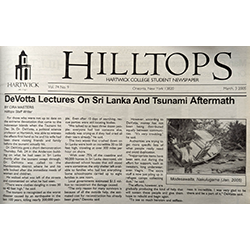
According to the first issue of Hartwick’s student newspaper, “Hilltops,” it was the students’ “spirit and enthusiasm together with help from the faculty” that led to the creation of a football team. The article also noted that players expressed appreciation for the hospitality and sportsmanship of opposing teams, as well as their gratitude for the support of the student body.
The 1928-29 yearbook, “Oyaron,” included a reflection from the team’s first manager, Howard Rogers. “Students, having played this game, the greatest game of games, were again possessed of the courage, the grit and the fighting zeal, to plunge through the line for their new school.”
Football continued at Hartwick with mixed results until 1950, when financial considerations and the anticipated impact of the Korean War on male enrollment led the College to discontinue the program. The football program officially returned to the field in fall 1992, following a 1991 vote by the Hartwick Board of Trustees to reinstate the team after a 42-year absence. With the addition of women’s flag football, Hartwick continues its tradition of expanding athletic opportunities for students.
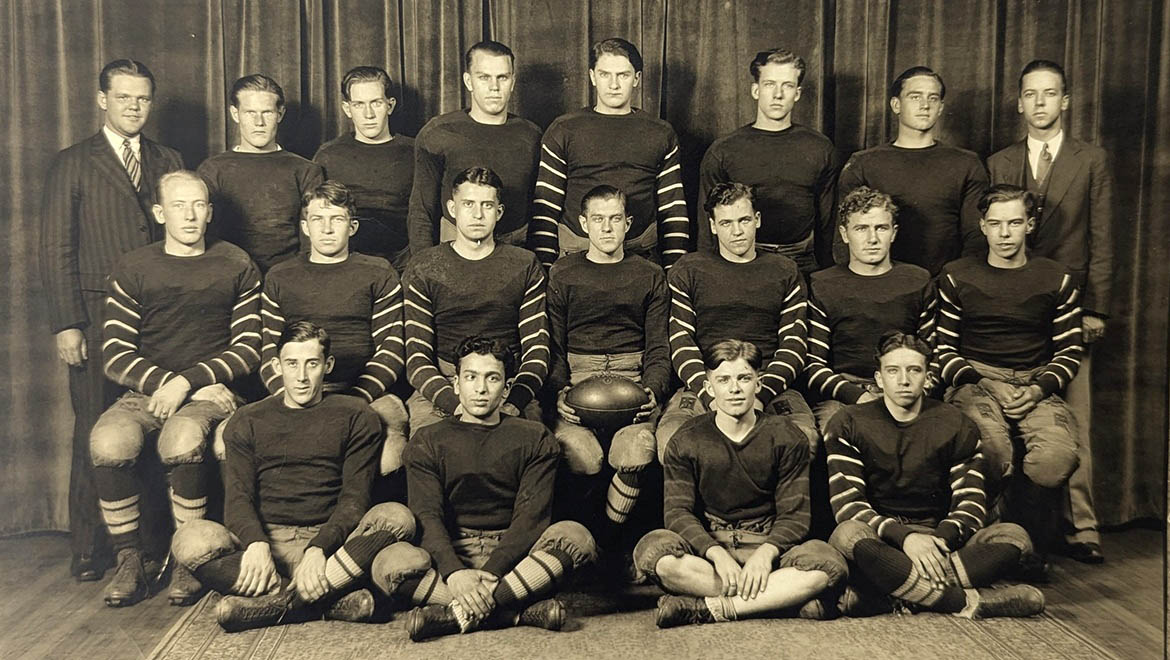
Photograph of Hartwick’s 1928 football team
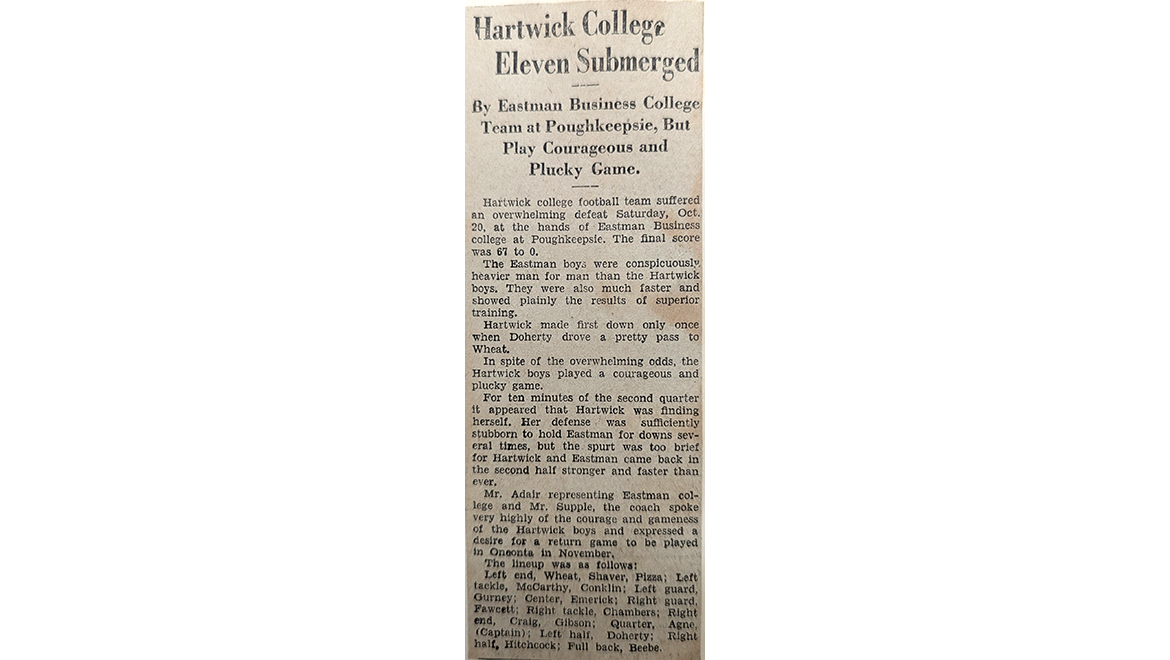
Oct. 8, 1928 Oneonta Daily Star report on the outcome of Hartwick’s first football game
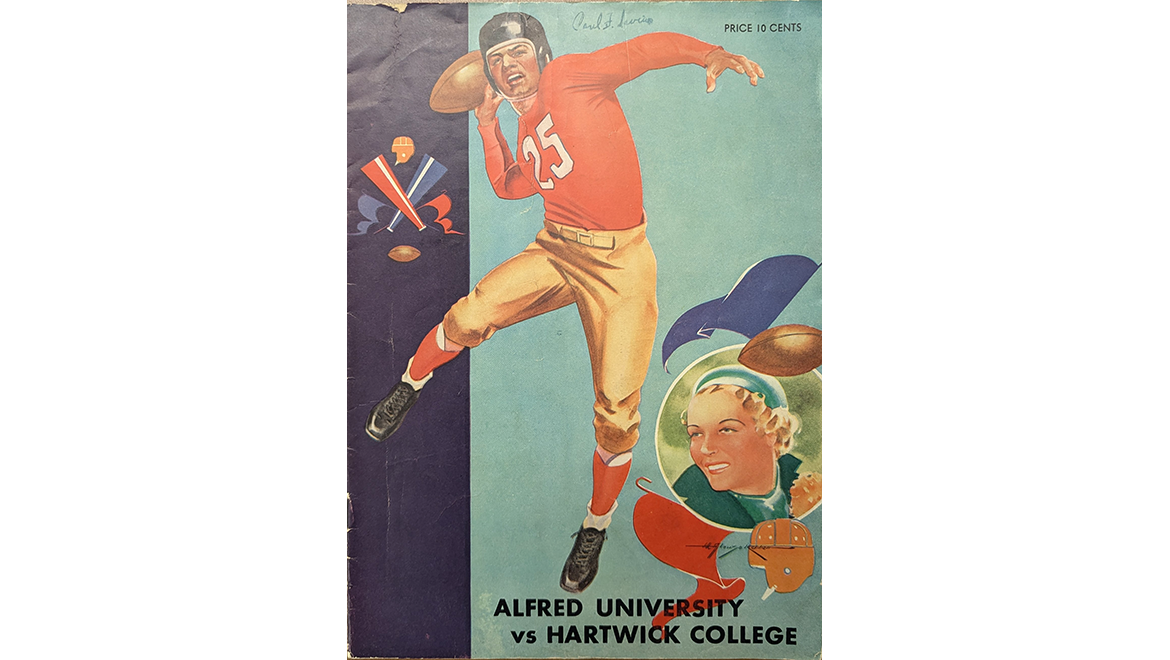
Cover of a football program from a game Hartwick played against Alfred University on Sept. 25, 1937. Both schools had “comeback” teams after both having had a “disastrous” 1936 season (Hartwick ended up losing to Alfred 0-27)
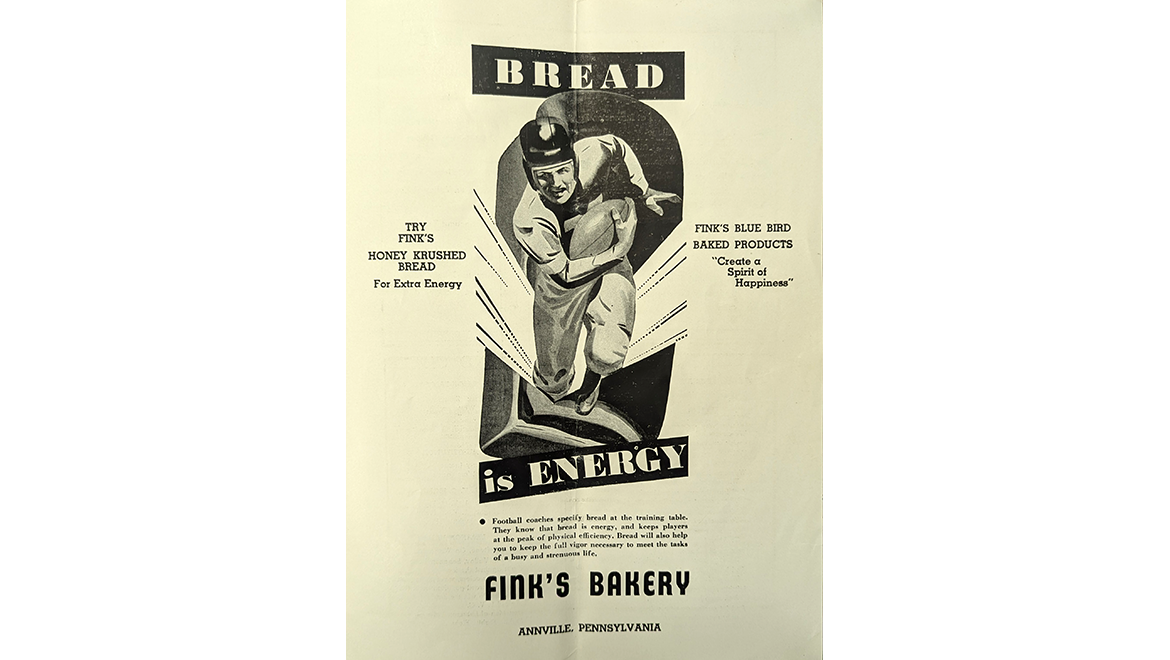
“Bread Is Energy.” An advertisement from a football program, c.1930s
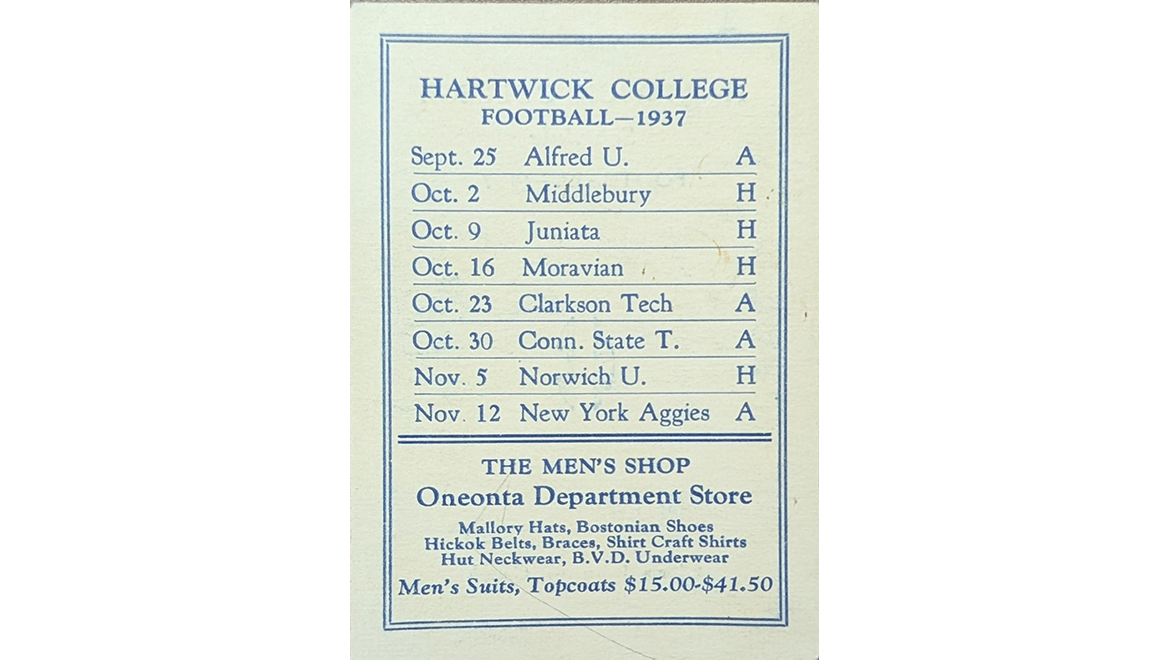
A 1937 football game schedule. Bresee’s Department store was a program sponsor, along with other local businesses such as Kandyland, Sherwood’s Coffee Shop and Oneonta Bar B Q.
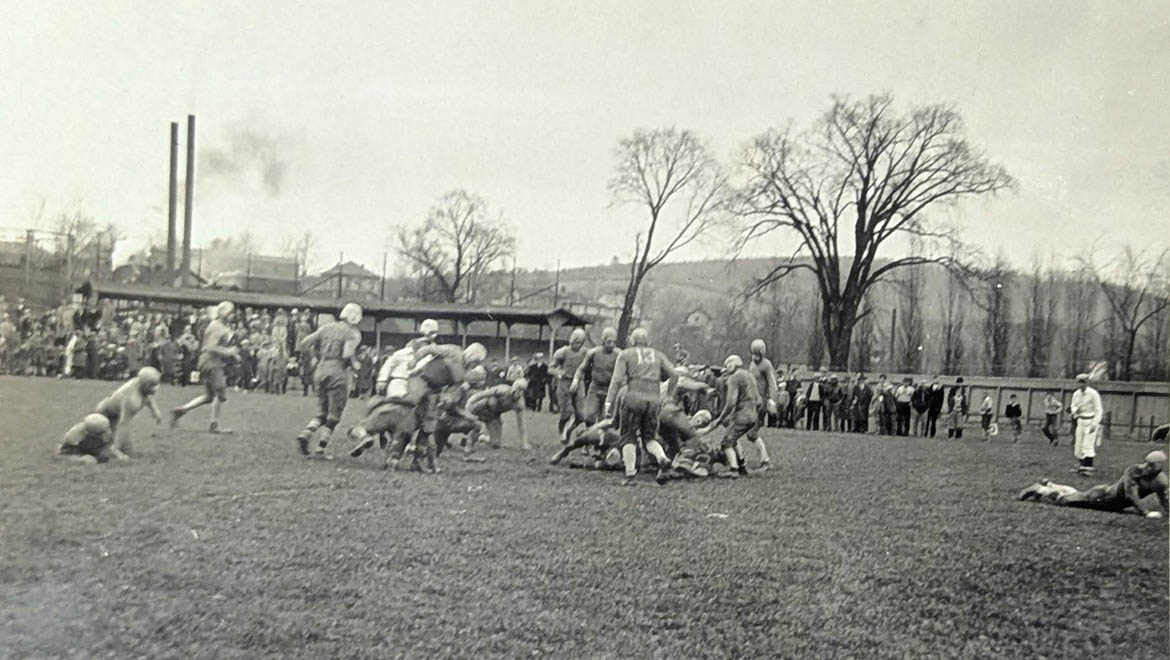
Photograph of a game played at Webb Island (former playing field in Oneonta- at Neahwa Park and Catella Park today. ), c.1930s.
Photos are part of the collection in Hartwick College Paul F. Cooper, Jr. Archives.