Freedman Prize for Student-Faculty Research

The Freedman Prize, established by Allen and Judy Freedman in 2002, recognizes superior student-faculty collaborative work.

This competition is open to Hartwick students of any major (including science majors). Applicants have to be full-time students in good academic standing without holds on their student accounts. The proposed work has to involve an original academic endeavor (project or research) completed in collaboration with a faculty mentor.

Because this work can begin as early as the student’s first year on campus, the competition is open to students in all four classes.

Proposals will be evaluated by a committee composed of three faculty members on merit value, content, and feasibility, and then ranked. The strongest proposals will be called for verbal interviews with the committee members. The finalists will be determined by the Freedman Program Coordinator based on the evaluation provided by the committee.

2025-2026 Freedman Prize Recipients

Freedman Prize Award in Applied Geoscience Recipients

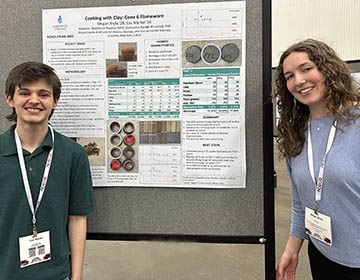
  • Megan Bryla ’26: Art & French; and Cas Markel ’26: Art; Nixtamalization: Cooking With Clay; Advisors: Prof. Rozene and Dr. Balogh-Brunstad.
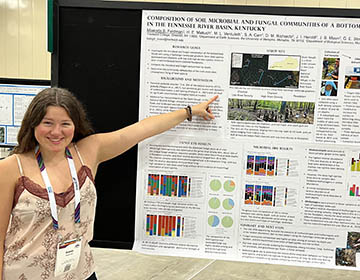
  • Miakoda Feldman ’26: Environment, Sustainability, & Society; Rhizosphere Community Response to Phosphorus Hotspots in Bottomland Forests in Western Kentucky; Advisors: Dr. Balogh-Brunstad and Dr. Carr.

Open Freedman Prize Award Recipients

  • Andrew Daisernia ’26: Biology; and Emmy Sema ’25: Computer Science; DNA QR Codes; Advisor: Dr. Carr.
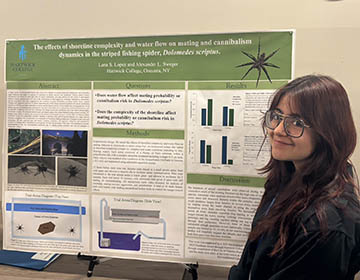
  • Luna Lopez ’26: Biology; The role of shoreline complexity and water flow rate on mating success and sexual cannibalism in the striped fishing spider, Dolomedes scriptus; Advisor: Dr. Sweger.
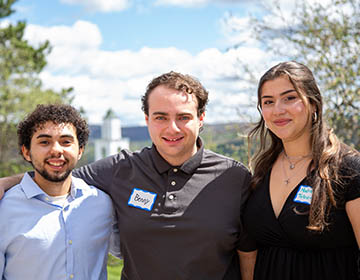
  • Benjamin Pauli ’26: Music Education; and Sebastian Quarella ’27: Music Education; and Madison Tobon ’27: Music Education; The Pathway to Becoming a Pre-Service Music Educator: Exploring the Efficacy of Recruitment Efforts; Advisor: Dr. Sheehy.
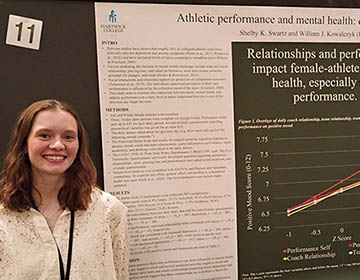
  • Shelby Swartz ’26: Biology & Psychology; A Daily Diary of Female Collegiate Student-Athletes During Their Athletic Season; Advisor: Dr. Kowalczyk.

2025-2026 Research Projects

Nixtamalization: Cooking with Clay

Nixtamalization is the traditional cooking process embedded in the foodways of indigenous communities throughout the Americas. By cooking maize or corn in an alkaline solution, (calcium hydroxide) the process of nixtamalization increases the nutritional value of corn and transforms it into a corn dough or masa. Over the year triple major (Art, French, ENSS) Megan Bryla ’26 and double major (Art and Art History) Cas Markel ’26 will work together with Professors Rozene, MFA, and Balogh-Brunstad, PhD to make and test clay cooking pots using a newly designed flame-ware clay body for cooking (Freedman 2023-25 Bryla and Van Engen). Using land race single origin corn from Mexico and the Northeastern United States, they will analyze side-by-side comparisons of nixtamalized corn cooked in hand-made clay pots, versus the corn cooked in a stainless steel pot to determine what, if any chemical, physical, and/or nutritional differences are present.

Rhizosphere Community Response to Phosphorus Hotspots in Bottomland Forests in Western Kentucky

Environment, Sustainability, and Society undergraduate student, Miakoda B. Feldman ’26 will undertake a research project with Dr. Zsuzsanna Balogh-Brunstad (Geology) and Dr. Stephanie Carr ’06 (Biology). The project explores the fungal communities that forage for nutrients to support bald cypress trees in the floodplains of Western Kentucky. Mesh bags of phosphorus-containing mineral (apatite), buried at the Four Rivers Basin in Fall 2024. The bags will be collected and analyzed for microbial and fungal presence and chemical changes. DNA will be extracted from the samples and sent to a lab to determine the microbial and fungal community through Sequencing. Miakoda will use bioinformatics (big data analysis) with the help of Dr. Carr to determine the microbial and fungal community profile of the samples. Miakoda and Dr. Balogh-Brunstad will use various microscopy techniques coupled with non-destructive chemical analysis to describe changes in the minerals. The team will work together to correlate the new information with existing data to improve the understanding of bald cypress dominated ecosystems.

DNA QR-Codes

In 2023, Andrew Daisernia ’24 and Dr. Stephanie Carr ’06 participated in a marine research expedition offshore the coast of Oregon to an area of the ocean known as the Juan de Fuca Ridge Flank. The NSF-funded work aimed to collect fluids from the oceanic crust of the seafloor for geochemical, genomic, and cultivation studies. These interdisciplinary analyses were designed to advance our understanding of deep subseafloor microbiology (archaea, bacteria, and their viruses) by providing new, fundamental insights into which organisms are present and how they survive in their environment. Daisernia, a biology major in the education program, participated as an educational outreach officer. Dr. Carr and Daisernia created an educational activity, that uses QR-Cords to explain how computers can interpret genomes. Because DNA has four nucleotide bases, the activity requires custom multicolored QR-codes created in collaboration with Emmy Sema ’25, a computer science major. In 2025, Daisernia was awarded a Freedman Prize. The funds will allow the development of the QR-code concept for publication in the Journal of Microbiology and Biology Education.

The role of shoreline complexity and water flow rate on mating success and sexual cannibalism in the striped fishing spider.

Luna Lopez ’26, in collaboration with Dr. Sweger, will study the mating behavior of
Dolomedes scriptus, also known as the striped fishing spider. This semi-aquatic arachnid is found in freshwater shoreline habitats and exhibits complex courtship behaviors including sexual cannibalism, where females may consume males. The project will examine how environmental factors, specifically water flow and shoreline complexity, affect mating success and cannibalism rates. Using aquatic circulation pumps to manipulate water flow, the team will observe spider pairs in controlled environments under different shoreline structures and water flow velocities. Research will take place in campus laboratories throughout summer and fall 2025, with spiders collected from Hartwick’s Pine Lake Environmental Campus. The goal is to better understand how changing habitats influence spider
behavior, offering insights into the species’ adaptability and survival. This work will further shed light on an understudied group of spiders, and provide some insight into hypotheses on the evolution of sexual cannibalism.

The pathway to becoming a pre-service music educator: Exploring the efficacy of recruitment efforts.

Hartwick Music Education student researchers investigate ways to help the growing deficit of K-12 music educators in New York State with their project “The pathway to becoming a pre-service music educator: Exploring the efficacy of recruitment efforts.” Under the guidance of program director Dr. Meghan K. Sheehy, music education majors Benjamin Pauli ’26, Sebastian Quarella ’26, and Madison Tobon ’27 examined the impact of music recruitment events on the program-of-study decisions for high school music students. Researchers surveyed participants before and after four music recruitment events during Hartwick College’s 25-26 academic year (Honor Band, Celebration Choir, Flute Day, and Jazz Day) to see if there was any effect on participant interest in becoming a music teacher after their experience at Hartwick Music’s special event and a brief discussion about the need for music teachers and the significant numbers of music teacher positions open in New York state. Participants who were high school seniors during the 25-26 academic year were surveyed one final time during the fall of 2026 to uncover which program of study they chose for their college education, if any. Findings may be used to inform statewide efforts to grow the dwindling pool of K-12 music educators.

A Daily Diary Study of Female Collegiate Student-Athletes During Their Athletic Season

Hartwick College Psychology Department Associate Professor and Chair, Dr. William Kowalczyk, is working with current Biology and Psychology student, Shelby Swartz ’26, to examine the day-to-day correlation of mental health challenges on the predictability of athletic outcomes in their study, “A Daily Diary Study of Female Collegiate Student-Athletes.” Their previous study on student-athlete mental health and time of season showed that athletic factors, such as coach relationship and individual performance, had the greatest impact on the mental health challenges. Now, they examine those factors on a more specific and daily level. Athlete mental health is becoming an increasing topic of conversation, but is still often stigmatized. Their findings could be useful in providing student-athletes with more adequate mental health resources and lessen the stigma in athletics. This study will be completed during the 2025-2026 academic year.

Zsuzsanna Balogh-Brunstand

“I believe that early hands-on research training helps students prepare for graduate school research and field/laboratory work in environmental sciences and geology. These research projects tackle real and complex questions that we are trying to answer using field, laboratory, and modeling methods many times in collaboration with other university researchers.”

Zsuzsanna Balogh-Brunstad

Professor of Geology and Environmental Sciences, Department Chair & Coordinator of the Environment, Sustainability, and Society Major
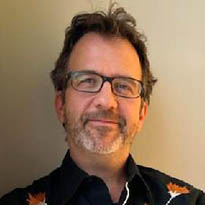
“For almost 25 years we have been privileged to witness the very best of collaborations between Hartwick’s outstanding, accessible, faculty and its entrepreneurial, motivated and self directed students. The results from over 300 students are remarkable – not only for the immediate academic output but by how the Freedman Prize Experience has shaped lives.”

Allen Freedman H'00 & Judy Brick Freedman H'13

Bill Kowalczyk

“The Freedman Prize presents a unique opportunity to work with a student and understand the totality of a research project. Not just how to conceptualize a project to answer a question and how to complete that research, but also how to get it funded. This is a great way to teach students about how the grants process works.”

William Kowalczyk

Associate Professor of Psychology & Department Chair

Freedman Prize Award for All Majors


2026-2027 PROPOSAL DEADLINE: TBA

Apply by completing the the Google From link below. Upload your budget as a separate document. Read the Required Contents of the Proposal Instructions to be sure you provide all necessary information when completing the online proposal form.

DESCRIPTION AND ELIGIBILITY: Open to All Majors

All Students (any majors) at Hartwick College are eligible to apply for the Open Freedman Prize who are in good academic standing without holds on their student accounts. However, the proposed project has to involve original research, and the applicant has to have a faculty collaborator/mentor (supported by a submitted commitment letter).

The award consists of a research grant of up to $4000 in support of the project. The Freedman Committee encourages proposals with smaller budgets as well. The final number of awardees will be determined based on the requested and available dollar amounts.

The proposal will be evaluated by a committee on merit value, content, and feasibility, then ranked. The strongest proposals will be called for verbal interviews early April. The finalists will be notified by the end of April, and are expected to present the research findings at the Annual Student Showcase of Hartwick College.

The proposal should follow the provided guidelines in the instructions as closely as possible and submit all required components for full consideration.

Student-Faculty Research

Prestigious Award Unlocks Once-in-a-Lifetime Opportunity for Student

Hartwick senior, awarded the 2022-23 Freedman Prize for Student-Faculty Research in Applied Geoscience, conducted her fieldwork.

Past Freedman Prize Recipients

2024-2025 Freedman Prize Award in Applied Geoscience Recipients

  • Sierra Brown ’25: Biology; Establishing isolates from the marine crustal biosphere; Advisor: Dr. Carr
  • Adrianna Dugan ’25: Chemistry & Music; Estimating Fungal Biomass through Ergosterol Quantification; Advisor: Dr. Balogh-Brunstad
  • Hannah Makuch ’26: Biology; and Makenna Ventuleth ’27, Biology; Fungal Community Profiles of Bald Cypress in the Four Rivers Basin, Kentucky; Advisors: Dr. Balogh-Brunstad & Dr. Carr

2024-2025 Open Freedman Prize Award Recipients

  • Will Brouillette ’25: Environment, Sustainability, and Society; Heavy Metals in the Charlotte Creek Watershed, New York; Advisor: Dr. Balogh-Brunstad
  • Dylan Dwyer ’26: Biology & Psychology; Caffeine and confidence: Caffeine’s effect on self-esteem, self-efficacy, and metacognition of agency; Advisors: Dr. Kowalczyk & Dr. Depperman
  • Peyton Humphries ’25: Geology; Assessment of Nitrogen and Phosphorus Levels in the Charlotte Creek Watershed, New York; Advisor: Dr. Balogh-Brunstad
  • Dahlia Landry ’26: Biology; Establishing isolates from the continental crust of the CUBO; Advisor: Dr. Carr

2023-2024 Freedman Award in Applied Geoscience Recipients

*Awarded in 2022-23 but is being executed in 23-24 AY.

  • Josephine Becker ’25: History & Anthropology; Funko Landfill Reconnaissance; Advisor: Dr. Namita Sugandhi
  • Megan Bryla ’26: Art, French, & ENSS and Ella Van Engen, ’25: Art & Psychology; Clay Cooking Pots & Material Science; Advisors: Professor Rozene & Dr. Balogh-Brunstad
  • Cassidy Markel ’26: Geology; Effect of Water and Nutrient Availability on Ectomycorrhizal Weathering of Minerals; Advisor: Dr. Balogh-Brunstad
  • ChawAkari San ’24: Biochemistry; Riboswitches of the Oceanic Crust; Advisor: Dr. Carr
  • Alyssa Schaeffer* ’24: Geology; Fossil coral preservation in the Pleistocene coral reefs at Devil’s Point, Great Inagua, Bahamas; Advisor: Dr. Griffing

2022-2023 Freedman Award in Applied Geoscience Recipients

  • Autumn Pope ’23: Biology; Understanding type-IV filament appendages in the marine subsurface, Advisor: Dr. Carr
  • Nicole Casab ’23: Biology, Investigating the Geochemistry of Basement Fluids from a Deep Borehole at Cornell University. Advisor: Dr. Carr
  • Alyssa Schaeffer ’24: Geology, Fossil coral preservation in the Pleistocene coral reefs at Devil’s Point, Great Inagua, Bahamas. Advisor: Dr. Griffing

2020 Freedman Award in Applied Geoscience Recipients

  • Gerald Meyer ’23: An Investigation to Classify a Northwestern African Meteorite. Project Advisor: Dr. Eric L. Johnson.
    • Tarrah Skye Smith ’21: Effect of Buffer Zones on Local Creek Water Quality. Project Advisor: Dr. Zsuzsanna Balogh-Brunstad.

    2019 Freedman Award in Applied Geoscience Recipients

    • Tylisha Gourdine ’20: Investigating metabolisms of microbial dark matter organisms in the crustal subsurface environment of Juan de Fuca Ridge. Project Advisor: Dr. Stephanie Carr.
    • Brynn Marion ’20: Origins of marble corestone weathering in Northern New York. Project Advisor: Dr. David Griffing.
    • Maxwell Pizarro ’20: Mineralogy and chemical change over a deformation gradient using a metagabbro from Dana Hill in the Adirondack Lowlands. Advisor: Dr. Eric L. Johnson.

Questions?

Contact Dr. David Griffing, [email protected].